


The pros and cons of learning Japanese online or in-person

Learning a new language opens doors to opportunities. Japanese, with its rich cultural heritage and global significance, is an enticing choice for many people. As technology continues to revolutionize education, aspiring learners are presented with the option to either learn online (through a course like TCJ) or immerse themselves in a traditional in-person setting. In this article, we explore the advantages and disadvantages of both approaches to help you make an informed decision on the most suitable learning method for you.
I. The benefits of learning Japanese online
A. Flexibility and convenience
One of the most significant advantages of online learning is the flexibility and convenience it offers. With online courses, the accessibility from anywhere eliminates the need for commuting, saving you valuable time and costs. Moreover, online platforms provide a unique opportunity for students from different parts of the world to connect and make friends while learning Japanese together.
B. Variety of resources and materials
Online learning provides access to a vast array of resources and materials. From interactive tools and language apps to authentic Japanese media and cultural resources, the possibilities are endless. With a simple click, the teacher and you can explore different learning materials and switch between them based on your preferences and learning style. This wealth of resources enhances your exposure to the Japanese language and culture, making the learning process more engaging and comprehensive.
C. Cost-effectiveness
Learning Japanese online can often be more affordable compared to in-person courses. Apart from the lower tuition fees, you can avoid expenses related to commuting, textbooks, and classroom facilities. Additionally, many language learning apps and platforms offer free or low-cost options, making language acquisition accessible to a wider audience.
II. The drawbacks of learning Japanese online
A. Limited face-to-face interaction
One of the main drawbacks of online learning is the lack of immediate feedback and correction. Without face-to-face interaction, it may be challenging to receive timely guidance and effectively practice conversational skills. However, at TCJ (our Japanese language school), we address this drawback by providing live online classes where instructors can provide immediate feedback and guidance to students. These virtual classrooms offer real-time conversation practice, ensuring that your progress is not hindered by the absence of face-to-face interaction.
B. Self-motivation and time management
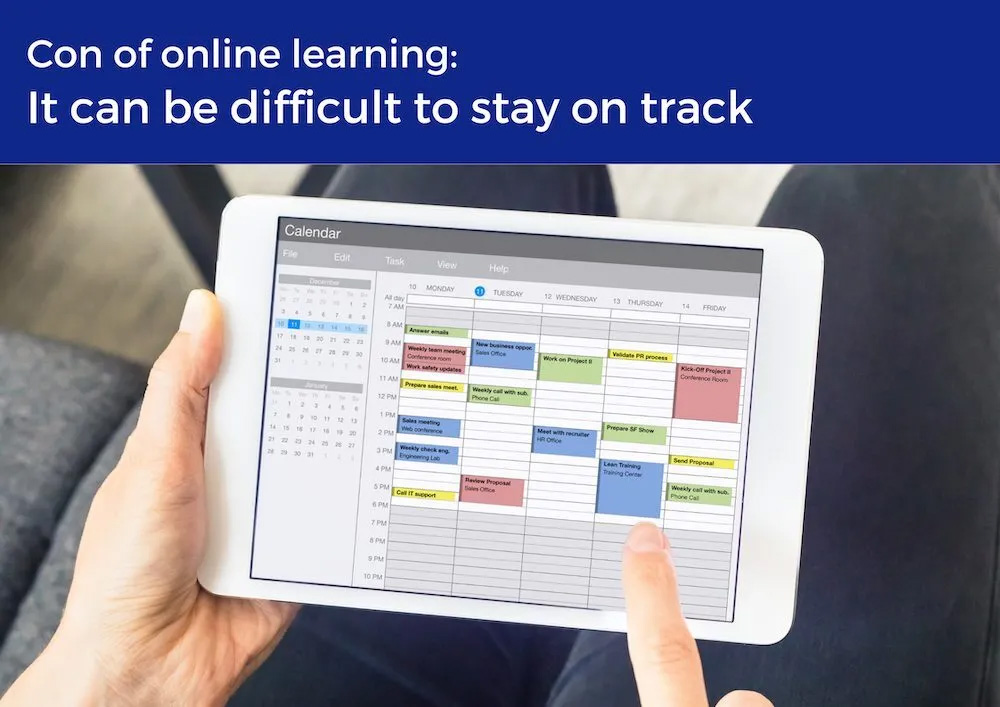
Learning Japanese online requires self-discipline and dedication to stay on track. Without external accountability, it may be challenging to create a structured study routine. Additionally, the online environment can be rife with distractions that hinder focus. At TCJ, we understand the importance of self-motivation and time management. Our online courses are designed to provide a supportive learning environment, with regular check-ins and personalized guidance from instructors. We also offer study resources and strategies to help you stay motivated and manage your time effectively.
C. Technical limitations
Online learning is dependent on a stable internet connection and suitable devices. Technical issues can disrupt the learning process and cause frustration. Moreover, some online platforms may lack personalized instructor support. At TCJ, we prioritize the smooth learning experience of our online students. Our instructors are readily available to provide bespoke guidance and support throughout your learning journey.
III. The advantages of learning Japanese in-person
A. Face-to-face interaction
In-person learning offers the advantage of immediate feedback and guidance from instructors. With real-time interaction, you can receive corrections and clarification promptly, enhancing your language acquisition. In a classroom setting, you also have ample opportunities for live conversation and practice with classmates, fostering a sense of community and peer support that can boost your motivation.
B. Structured learning environment
For individuals who thrive in a structured environment, in-person courses provide the necessary accountability and discipline. Regular classes ensure that you maintain a consistent study routine and progress steadily. In a physical setting, instructors can provide one-to-one attention, addressing your individual strengths and weaknesses effectively. Moreover, the classroom atmosphere fosters concentration and focus, creating an optimal learning environment.
C. Cultural immersion
Learning Japanese in-person offers a unique opportunity for cultural immersion. Within the classroom, it is easier for the teacher to expose you more deeply to Japanese culture, enhancing your understanding of the language in its cultural context. For example when classes are in-person, it is easy for teachers to bring in Japanese food for the students to try but this is not possible when learning online. Additionally, language schools (like at TCJ) often organize activities, events, and field trips that provide firsthand experiences of Japanese culture. Moreover, direct access to language partners or conversation exchange opportunities further enhances your cultural immersion.

IV. Disadvantages of learning Japanese in-person
A. Time and location constraints
In-person courses often come with fixed schedules, which may not be suitable for individuals with busy lives or irregular schedules. Commuting to the language school regularly can also be time-consuming. At TCJ, we offer the flexibility to choose between an in-person, online or hybrid class structure, allowing you to tailor your learning experience to your lifestyle. Additionally, our language school is located in central Tokyo and is very easy to get to for most people. We even offer private tutors for people who want to tailor exactly when they have classes.
B. Higher costs
Compared to online courses, in-person learning can be more costly. Tuition fees and additional expenses for textbooks and commuting can strain your budget. Moreover, budget-friendly options may be limited in traditional language schools. At TCJ, we understand the importance of affordability. We offer competitive tuition fees and provide guidance on cost-effective learning resources. Our aim is to make Japanese language education accessible to everyone.
C. Class size and individual attention
Large class sizes in traditional language schools may result in less individualized attention from instructors. Limited opportunities for one-on-one interaction can hinder your progress. However, at TCJ, we maintain smaller class sizes to ensure that each student receives individual attention and guidance. Our instructors are committed to helping you achieve your language goals, providing support tailored to your specific needs. Your learning pace is not influenced by the overall progress of the class.
Get the best of both worlds with TCJ
Whether you choose to learn Japanese online or in-person, both approaches have their merits and drawbacks. Online learning offers flexibility, a variety of resources, and cost-effectiveness. However, it requires self-motivation, time management, and may have technical limitations. In-person learning provides face-to-face interaction, a structured environment, and cultural immersion but comes with time and location constraints and higher costs. At TCJ, we strive to provide the best of both worlds by offering a comprehensive online learning experience that addresses the challenges faced by online learners while maintaining the advantages of traditional in-person learning. Ultimately, the choice between online and in-person learning depends on your individual preferences, lifestyle, and goals.
At TCJ, we are committed to supporting you on your language learning journey, equipping you with the skills needed to thrive, no matter how demanding your schedule might be. For more information on what teaching we offer, please see our course page.

SHARE ON



- Japanese for Expats
- International Student Visa Program
- Job Hunting in Japan
- Japanese Language School
- Email Phrases
- Business Japanese
- Keigo
- Japanese For Executives
- Japanese Manners
- Learn Japanese
- Japan Trivia
- Basic Japanese
- Japanese Culture
- Japanese Beginner
- Japanese Advanced
- Japanese Greetings
- Japanese Phrases
- Online Lesson
- JLPT
- Business & Daily Life Japanese Program
- ビジネス日本語
- Interview
- 日本語上級者
- Japanese tips
- Kanji
- Want to Learn Japanese
- Private Lesson

4 Must-Have Apps for Everyday Life in Japan

Japan’s Iconic 抹茶(Matcha): Uncovering Myths and Reality