


What to know before taking the JLPT (tips from real students)
About the JLPT
The Japanese Language Proficiency Test (JLPT) is the most universally recognized Japanese language test, and is widely used as a benchmark for Japanese proficiency. Testing occurs twice per year, with people around the world taking it for a variety of reasons– to measure their own proficiency, to get a job in Japan, to increase their salary, or to land a promotion.
There are five levels, from JLPT N5 (the lowest) to JLPT N1 (the highest). The test questions are in a multiple choice format, and are split up into four sections: vocabulary, grammar, reading, and listening.
We interviewed our own JLPT students to get insider information and tips on the best way to prepare for the JLPT and ensure success.
Studying for the JLPT
Tools and resources for the JLPT
There are a variety of resources available to study for the JLPT exams. When we asked our students what they use to study, the top answers were past exams and practice questions, watching YouTube videos, using workbooks and prep books, and attending Japanese classes. JLPT publishes official workbooks so that students can master the types of questions that will be asked during the test. The JLPT website also has sample questions to practice with. Some prep books that repeatedly came up in conversation were Shin Kanzen Master, Nihongo So-matome, and Kanji Master.
How much time to set aside to study
There is no one-size-fits-all for how much time to set aside, as this is highly individual, but it goes without saying that the more time you put in the better. It also depends on which level you are aiming for. Studying for the N5 will take less time than studying for the N1, as N1 has significantly more vocabulary and kanji to memorize.
As a general rule of thumb, our JLPT students recommend studying daily, for at least 2 hours, focused solely on the JLPT. They also recommend doing as many practice problems as possible every day and to take a mock test at least once before the big day. The exact amount of hours, however, depends greatly on your level– e.g. if you have already studied Japanese for many years, have a foundational knowledge of kanji, etc– as well as your schedule and goals.

TCJ’s JLPT classes in Tokyo
TCJ offers various courses tailored to students who want to pass the JLPT across all levels. One of the courses offered is the student visa program, which allows students to obtain a study abroad visa for up to two years for university, graduate school, vocational school, or job hunting in Japan.
Another one is the Intensive Class, which focuses on the four skills of reading, writing, speaking, and listening. This curriculum helps students acquire practical communication skills and reach the level of proficiency needed for higher education, work, and everyday life. The course also prepares students for the JLPT.
All courses are divided into three levels: beginner (N5-N4 level), intermediate (N3 level), and advanced (N2 level), so students can choose the level that is the best fit. They are available to those living in Japan or abroad, and either in-person or online.
TCJ also has a Business Japanese Class that is offered three times per week, which includes a JLPT-focused class for those above N3 level. Students learn key grammar and phrases used in business, allowing them to master business Japanese in a short amount of time. The class, which is also available in-person or online, covers Japanese business etiquette, email writing, and other skills necessary for job hunting and working in Japan.
Tips for success – taking the JLPT
Using the internet is a great way to ensure that you are as prepared and confident as possible on the day of the exam. For example, some of our students look at online forums to see what past test takers have said about the exam. Others watch YouTube, not only to help them improve their Japanese, but also to hear stories of other people who have taken the JLPT.
As the JLPT is a timed test with specifically-formatted questions, it is also crucial to practice answering questions under time pressure. The more you practice, the more confident you will feel on the day. Our students repeatedly told us that the test feels quite fast, so it’s best to make sure you are able to get through the questions in the allotted time. Some test centers don’t have a clock so be sure to bring a watch with you to avoid running out of time without realizing.
It’s also a good idea to listen to as much Japanese as possible to improve your listening comprehension. You could listen to Japanese broadcasts like NHK, or to Japanese TV, podcasts, movies, etc. Reading is also a big part of the exam, so be sure to be comfortable reading a lot of information, quickly. This only comes with practice, so read Japanese news articles, blogs, Twitter posts, etc. Our students emphasize that it’s critical that you enjoy the learning process. Do things that you genuinely enjoy, whether that’s watching anime or reading fashion magazines. This will help you to not only pass the JLPT, but to continue forward with your Japanese studies in general.

How to know if the JLPT is right for you
Each level of JLPT has its own merits and purpose. JLPT N5 and N4 are best for beginners who wish to come to Japan to study or who are just starting off on their language journey. N3 is good for those wishing to master conversational Japanese, or who want to eventually pass N2 or N1. N2 and N1 are for the more advanced learners who wish to prove their proficiency for educational or professional purposes. Many employers and universities only accept students who have proved their Japanese abilities by passing the N1 test, so a big motivator for those taking the N1 is to get into university or to apply for jobs.
It is important to remember that the JLPT tests are not comprehensive, as they only cover reading and listening, not speaking or writing. It’s a good way to test your general Japanese knowledge, but is not necessarily the best for any sort of specialization. There are some students who feel that even though they have passed N1, they are still not fluent as they are not able to speak the language well. Thus, it’s important to supplement your JLPT studies with output practice.
Start preparing for the JLPT with TCJ
As mentioned, TCJ offers flexible courses for a wide variety of needs, including JLPT qualification. See our website for more information, and please feel free to get in touch if you’d like to learn more about TCJ. We are excited to embark on your Japanese language studies with you.

SHARE ON



- Japanese tips
- Kanji
- Want to Learn Japanese
- Private Lesson
- Japanese for Expats
- International Student Visa Program
- Job Hunting in Japan
- Japanese Language School
- Email Phrases
- Business Japanese
- Keigo
- Japanese For Executives
- Japanese Manners
- Learn Japanese
- Japan Trivia
- Basic Japanese
- Japanese Culture
- Japanese Beginner
- Japanese Advanced
- Japanese Greetings
- Japanese Phrases
- Online Lesson
- JLPT
- Business & Daily Life Japanese Program
- ビジネス日本語
- Interview
- 日本語上級者

4 Must-Have Apps for Everyday Life in Japan
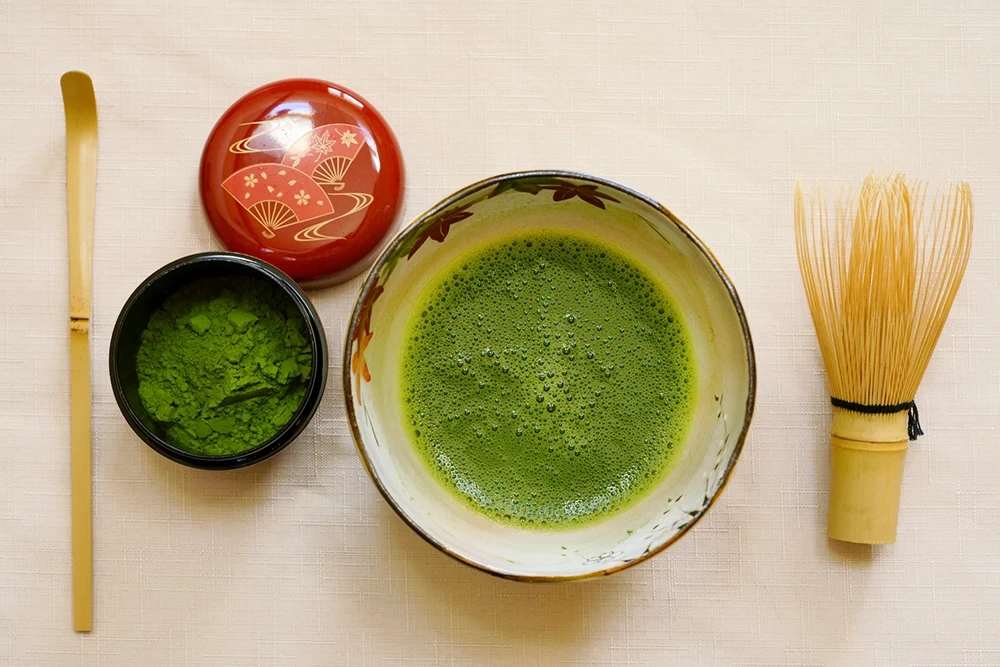
Japan’s Iconic 抹茶(Matcha): Uncovering Myths and Reality