


Workplace-Appropriate Attire in Japan: Understanding TPO and Business Casual Dress Codes
Each Japanese corporation has its own guidelines regarding workplace attire, depending on the nature of the job and the company culture. Some companies require employees to wear suits, while others allow relatively casual clothing. However, this flexibility does not mean that “you can wear whatever you want.”
In Japanese business settings, attire is not simply a matter of fashion—it is recognized as a part of business etiquette. This article provides an easy-to-understand explanation of the basics of workplace attire in Japan, the meanings of the commonly heard terms “TPO” and “office casual,” and key points regarding appropriate attire for both men and women.
The term “office casual” is not just about what to wear. In Japanese business settings, it reflects a mindset of showing consideration for others rather than simply following a dress code, which will be explained further in this article.
Through this article, we hope readers will gain a deeper understanding of why concepts such as “office casual” and “TPO” are valued in Japanese business settings, and learn how to apply this knowledge appropriately according to different situations.
An Overview of TPO: A Concept Commonly Used in Japanese Business Settings
When discussing dress codes and manners in Japan, the term TPO is often used. This acronym is derived from the English words Time, Place, and Occasion, with each letter representing the factors that should be considered when choosing appropriate behavior and attire.
In Japanese business settings, employees are expected to choose attire that is appropriate for the TPO. In other words, it refers to selecting clothing that takes into account when, where, and on what occasion it should be worn.
For example, the appropriate dress code may differ depending on the situation, such as between performing daily tasks at the office and meeting with valued clients. For routine office work, it may be acceptable to wear relatively casual clothing, whereas wearing a suit or jacket is a safer choice when visiting a client, attending an interview, or giving a presentation.
Three Essentials of Japanese Office-Casual Style
Office casual is a style of attire commonly used in Japanese business settings. It describes clothing that is less formal than a suit, yet still suitable for the workplace and polished enough to convey a professional impression.
Below are three basic principles to keep in mind when dressing in a way that feels natural and appropriate in Japanese business settings.
1. A Clean and Polished Appearance
Clothing should be free of wrinkles and stains, with particular attention paid to areas such as collars and cuffs. Clean, well-groomed hair is equally important, as an untidy appearance can undermine an otherwise appropriate outfit.
Expensive clothing is not necessary; what matters more is avoiding a sloppy or unkempt impression. A clean and polished appearance helps create a sense of reassurance and trust in the people around you.
2. Harmony with Those Around You
It is important to choose attire that aligns with the nature of the workplace. Even in offices where uniforms are provided, employees may still be seen as representatives of the company when commuting to work or meeting people outside the organization.
When unsure about what is appropriate, it can be helpful to look to supervisors, senior colleagues, or coworkers for guidance and observe the standard of dress within the workplace.
3. Functionality and Comfort
It is also important to choose clothing and shoes that allow for ease of movement and remain comfortable throughout the workday. Even if an outfit looks polished, clothing that restricts movement or shoes that make walking for long periods uncomfortable can make it difficult to stay focused at work. In addition, overly expensive clothing or excessively high heels may be considered inappropriate in some workplace environments.
Office Attire Basics and Key Considerations
Next, let us look at some basic examples of office attire that are generally regarded as appropriate in Japanese workplaces.
For Men: A Clean and Polished Appearance
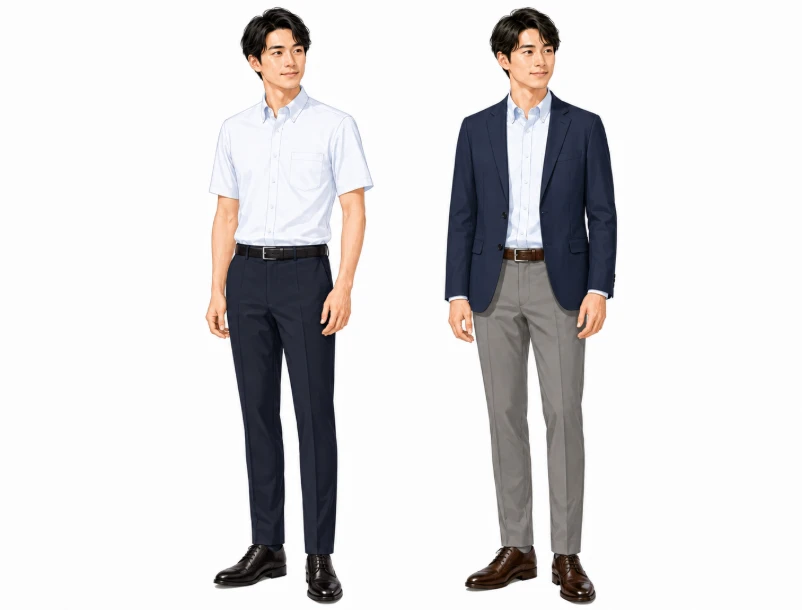
For men, it is common to wear suits in black, navy, or gray, paired with light-colored shirts such as white or pale blue. When choosing a tie, understated patterns are generally the safest option.
Black or brown leather shoes are also commonly worn. Stains and scuffs on shoes tend to be more noticeable than one might expect, so regular care and polishing are important. Even if the overall outfit looks polished, unclean shoes can leave a negative impression.
In recent years, a style known as “Cool Biz” has become widely recognized in Japan. Originally introduced as a response to the intense summer heat, it encourages lighter and more casual business attire, such as wearing a suit without a tie or jacket. However, some companies may still prohibit items such as shorts or sandals for men, making it important to check the dress code and workplace expectations of each organization.
For Women: Elegance Without Excess
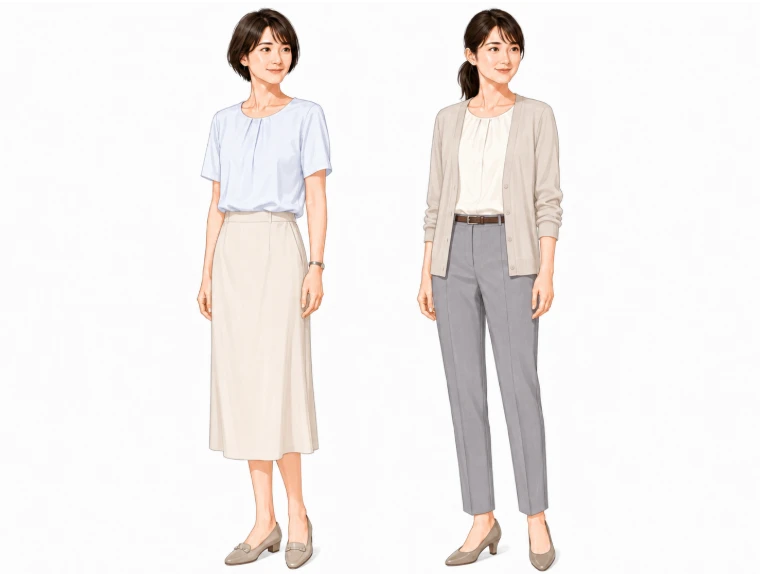
For women as well, a clean and polished appearance is an essential part of office attire. In both formal and business-casual settings, it is common to wear trousers or skirts paired with jackets. Colors such as black, navy, beige, and gray are generally considered safe and versatile choices.
It is also important to pay attention to the level of skin exposure. Tops with low necklines or skirts that are too short are best avoided. When choosing a skirt for workplace attire, the length should remain appropriate even when seated.
As for shoes, pumps or loafers that maintain a polished appearance while remaining comfortable throughout the day are often a practical choice. Moderately heeled shoes can also strike a good balance between appearance and functionality. Accessories should be kept understated, and it is considered good manners to avoid wearing strong perfume in the workplace.
When in Doubt, Dress Slightly More Formally
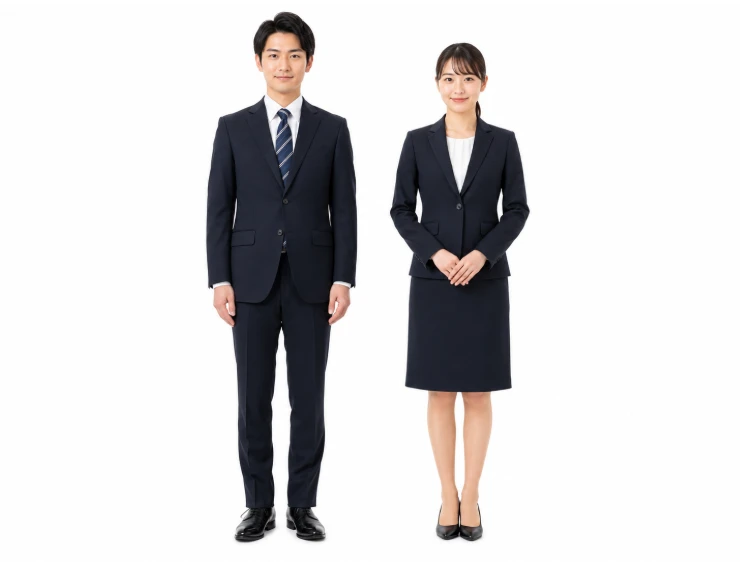
When the workplace culture is still unfamiliar after joining a company, it is generally safer to choose more formal attire rather than something too casual. On the first day of work, wearing a suit or a polished jacket can help create a professional impression while observing the atmosphere and expectations of the workplace. As a better understanding of the environment develops, the level of formality can gradually be adjusted.
Beyond Appearance: Choosing Attire with Consideration for Others
Workplace attire guidelines are not merely rules to follow; they are also a way of visually expressing consideration for others.
Maintaining a well-groomed appearance when meeting with clients communicates respect for their time and presence — a message conveyed without words. Similarly, dressing in a way that aligns with the workplace environment and paying attention to appropriate commuting attire can reflect a willingness to work cooperatively as part of the team.
By keeping simple questions in mind, such as “Could this attire make others uncomfortable?” or “Does it feel appropriate for a professional environment?”, choosing clothing that suits each workplace becomes more natural and intuitive. This mindset also helps build trust and positive relationships with clients and colleagues.
Learn Real-World Business Japanese and Culture with TCJ
To build a career in Japan, it is essential to understand not only business Japanese, but also workplace customs and the unspoken rules introduced throughout this article.
Many international students studying Japanese find themselves struggling with workplace expectations and cultural differences, even when they are confident in their Japanese language skills.
At TCJ, experienced instructors help students develop the cultural understanding and business manners needed to live and work in Japan, going beyond language education alone.
Whether the goal is to succeed in a Japanese company, communicate more smoothly in professional settings, or gain a deeper understanding of Japanese culture, TCJ provides practical Japanese learning that connects language with real-world experiences.
Understanding both the language and the culture can become a powerful foundation for building confidence and creating a fulfilling career in Japan.
References
Nagae, Y. (2018). Mirai o hiraku bijinesu manā: Shūkatsu・shakaijin debū o hikaeta minasan ni (4th ed.). Daigaku Kyōiku Shuppan.
Furuya, H. (Ed.). (2007). Reberu 1 no bijinesu jōshiki: Masaka!? Konna koto mo shiranai no!? Subarusha.

SHARE ON



- Japanese For Executives
- Japanese Manners
- Learn Japanese
- Japan Trivia
- Basic Japanese
- Japanese Culture
- Japanese Beginner
- Japanese Advanced
- Japanese Greetings
- Japanese Phrases
- Online Lesson
- JLPT
- Business & Daily Life Japanese Program
- ビジネス日本語
- Interview
- 日本語上級者
- Japanese tips
- Kanji
- Want to Learn Japanese
- Private Lesson
- Japanese for Expats
- International Student Visa Program
- Job Hunting in Japan
- Japanese Language School
- Email Phrases
- Business Japanese
- Keigo

4 Must-Have Apps for Everyday Life in Japan
Japan’s Iconic 抹茶(Matcha): Uncovering Myths and Reality