

Japan’s Iconic 抹茶(Matcha): Uncovering Myths and Reality
The Matcha the World Loves — and the Reality Behind It
In recent years, matcha has gained popularity worldwide. From matcha lattes and ice cream to matcha chocolate, a variety of matcha-flavored treats have become widely available. Today, it is no longer unusual to find vibrant green matcha desserts in cafés and supermarkets across Europe, the United States, and many Asian countries.
One of the key factors behind matcha’s growing popularity was the increasing interest in health and wellness. Matcha contains catechins and theanine, and it became recognized as a healthy beverage that fit well with the global wellness trend, especially in Western countries.
Furthermore, when Starbucks, one of the world’s largest coffee chains, introduced matcha lattes to its menus around the world, matcha quickly gained even more recognition. Its beautiful green-and-white color combination also caught the attention of social media users and influencers, who shared visually appealing matcha drinks and desserts online.
In this way, matcha has become a worldwide favorite — a stylish and healthy drink from Japan.
This global trend has created an image of Japan where people are believed to enjoy matcha every day. Some Japanese learners may still have this impression.
However, the reality is quite different. In fact, not many people in Japan drink matcha on a daily basis.
So why is matcha, despite its strong connection with Japan, not an everyday beverage for most Japanese people? This article explores the relationship between matcha and Japanese culture, while uncovering the richness of Japan’s tea traditions.
An Introduction to Matcha
Different Types of Green Tea: What Makes Matcha Different?
In Japan, there are many types of green tea, including 緑茶:ryokucha, 煎茶: sencha, ほうじ茶: hōjicha, 玉露: gyokuro, 玄米茶: genmaicha, and 抹茶: matcha. Although they all come from the same tea plant, each type differs in how it is cultivated, processed, and enjoyed.
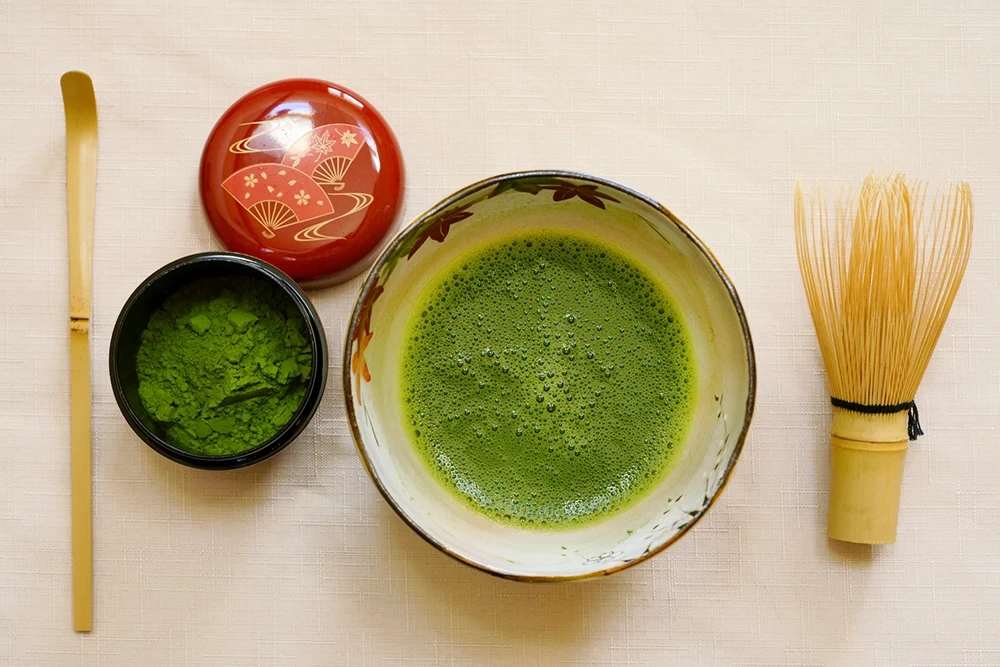
What makes matcha unique is that the tea leaves are ground into a fine powder and consumed whole. The leaves are grown in the shade before harvest, then steamed, dried, and slowly stone-ground into a fine powder.
To prepare matcha, a small amount of hot water is added to the powder, which is then whisked with a bamboo whisk called a chasen until it becomes smooth and frothy. Because the powdered tea leaves are consumed directly, you can enjoy all of their nutrients without any waste.
By contrast, sencha is the type of green tea most commonly enjoyed in Japan on a daily basis. Unlike matcha, hot water is poured over the tea leaves to extract their flavor and nutrients, and only the brewed liquid is consumed. This is similar to how black tea is prepared and enjoyed in many Western countries.
Why Matcha Is Often Confused with Green Tea
Both matcha and sencha are often translated as “green tea” in English. This is likely one of the reasons why they are easily confused among people outside Japan. When people hear the term “green tea,” many may picture matcha, which can lead to the stereotype that Japanese people drink matcha every day.
In Japanese, each type of tea has its own distinct name. However, the English translation sometimes blurs the distinction between them, causing different types of tea to be associated with the same image.
Everyday Green Tea in Japan
The most common green teas enjoyed daily by Japanese people are sencha and hōjicha.
Sencha is known for its refreshing taste and pleasant bitterness, and it has long been enjoyed as a perfect companion to everyday meals. Hōjicha is made by roasting tea leaves over high heat, creating a fragrant aroma and a mild flavor. Because it contains less caffeine than many other types of tea, it is widely enjoyed by people of all ages, from children to older adults.
In recent years, the idea that “tea is something you buy in a bottle” has become increasingly common, especially among younger generations. Convenience stores and supermarkets offer a wide variety of bottled teas, including green tea, hōjicha, and mugicha. As a result, the habit of brewing tea at home has gradually become less common.
Matcha in Everyday Japanese Life
As mentioned earlier, the majority of Japanese people do not drink matcha on a daily basis. This means that there are not many people in Japan who prepare and drink traditionally whisked matcha as part of their everyday routine.
Although matcha-flavored sweets and drinks are widely enjoyed in Japan, apart from those who practice tea ceremony or work in fields related to it, few people have a lifestyle of making matcha with a chasen every morning.
In reality, what is closer to the daily lives of Japanese people are more familiar teas, such as bottled green tea from convenience stores, hojicha made with tea bags at the workplace, or sencha enjoyed after meals. Matcha may be a symbol of Japan, but it is not the tea that most Japanese people drink as part of their everyday routine.
How Is Matcha Enjoyed in Japan?
Matcha in the World of Tea Ceremony
For many people, matcha represents Japanese culture through the practice of 茶道: sadō, or the Japanese tea ceremony. Sadō is a traditional cultural practice in which carefully prepared matcha is served to guests with sincerity and respect. It flourished during the Muromachi period, particularly among the aristocracy and the samurai class, and is said to have been perfected by the tea master Sen no Rikyū.
One of the most important concepts in sadō is wabi-sabi, the appreciation of beauty in simplicity, tranquility, and imperfection. Rather than simply learning how to prepare a bowl of matcha, practitioners of sadō also cultivate etiquette, mindfulness, aesthetic appreciation, and a respectful way of engaging with others.
Inside the World of Tea Ceremony: Tea Gatherings, Tea Rooms, and Wagashi
Tea ceremonies are typically held in small, simple tea rooms designed to create a calm and peaceful atmosphere. There, the host carefully prepares and serves matcha while the guest enjoys it, creating a quiet moment of connection and hospitality. 和菓子: Wagashi, traditional Japanese sweets, are often served alongside matcha. Their delicate sweetness complements the pleasant bitterness of the tea, while their beautiful seasonal designs make the experience even more enjoyable.
In recent years, visitors to Japan have had increasing opportunities to experience traditional tea ceremonies across the country. If you have the chance, try preparing a bowl of matcha yourself using a chasen (bamboo whisk). It is a wonderful way to experience Japanese culture firsthand.
More Than a Drink: Matcha in Cafés, Desserts, and Cuisine
Matcha is more than just a drink; it is also a popular flavor used in a variety of foods. At convenience stores and cafés in Japan, matcha sweets such as ice cream, cakes, parfaits, and chocolate are available throughout the year and enjoyed by many people.
For many Japanese people today, matcha is not something they prepare and drink at home every day. Instead, it has become a familiar flavor enjoyed through sweets and café menus.
The Global Matcha Trend and Japan’s Cultural Identity
The global matcha trend spread rapidly after the 2010s and has also influenced people in Japan. Interestingly, the fact that matcha became loved and recognized around the world led Japanese people to rediscover the appeal of matcha themselves. This can be seen as a kind of “reverse import” of Japanese culture.
The Japanese government and tourism industry have actively promoted matcha, tea ceremony, and Japanese cuisine as part of the “Cool Japan” strategy to share Japanese culture with the world. As a result, the association between Japan and matcha has become even stronger, creating a powerful image of Japan as a country connected with matcha.
However, there is a gap between the image of Japan presented to the world and the reality of everyday life in Japan. The idea that “Japanese people drink matcha every day” may be considered a slightly exaggerated image of Japan that developed through the process of cultural promotion and communication.
When introducing a culture, it is natural that simple and easy-to-understand symbols are often chosen. However, it is also important to understand the background behind these representations.
Japanese Tea-Related Expressions
Tea has inspired many expressions in the Japanese language. Here are a few examples:
Ocha wo Nigosu (お茶を濁す)
This expression means to avoid giving a clear answer by saying something vague or evasive. It comes from the image of cloudy tea, symbolizing an unclear or ambiguous attitude.
Chaban (茶番)
This word refers to a situation where an obvious deception or a meaningless story is taking place. It originally comes from a comical performance involving tea.
Ocha no Ko Saisai (お茶の子さいさい)
This expression refers to something that can be done or solved easily. It comes from the image of chagashi, traditional Japanese sweets enjoyed with tea, which are easy to eat with one hand.
Knowing these expressions helps learners better understand conversations and texts in Japanese. Understanding the background behind each phrase can deepen their understanding of the Japanese language and culture.
Matcha as a Gateway to Understanding Japanese Culture
In Japan today, matcha is more than just an everyday drink. It is enjoyed in various ways, from special occasions to sweets and desserts.
Matcha continues to attract people as it exists where Japanese traditional culture and modern trends meet. It has a deep history rooted in the spiritual world of tea ceremony, while at the same time being easily found in everyday sweets and desserts. This contrast may be one of the reasons why matcha remains so fascinating.
Learn Real-Life Japanese and Culture at TCJ
Just like the depth of matcha, the Japanese language also has many layers to discover. Learners can find something new every time they continue learning.
By getting to know the language, learners can discover the culture behind it, while understanding Japanese culture can help them appreciate the language even more. Through this cycle of language learning, learners can find true enjoyment in studying Japanese.
These discoveries can only be truly understood through communication and conversations with people.
At TCJ, we are fully committed to supporting your journey, whether you want to discover Japan or deepen your understanding of its culture. Learners can discover the charms of Japan not only in the classroom but also through cultural experiences in daily life.
Join us at TCJ to learn Japanese and experience Japanese culture firsthand. We are here to support your next step toward a new journey in Japan.
References
Ministry of Agriculture, Forestry and Fisheries (MAFF), “Current Situation of Tea in Japan”
https://www.maff.go.jp/j/tokei/kouhyou/sakumotu/sakkyou_kome/index.html
Agency for Cultural Affairs, “Basic Act on Culture and the Arts / Materials on Cultural Promotion (Tea Ceremony and Traditional Culture)”
https://www.bunka.go.jp
Japan Tea Export Promotion Association
https://www.jtepa.or.jp
Japan National Tourism Organization (JNTO), “Cultural Experience Contents for International Visitors (Tea Ceremony Experiences)”
https://www.jnto.go.jp
SHARE ON



- Japanese Greetings
- Japanese Phrases
- Online Lesson
- JLPT
- Business & Daily Life Japanese Program
- ビジネス日本語
- Interview
- 日本語上級者
- Japanese tips
- Kanji
- Want to Learn Japanese
- Private Lesson
- Japanese for Expats
- International Student Visa Program
- Job Hunting in Japan
- Japanese Language School
- Email Phrases
- Business Japanese
- Keigo
- Japanese For Executives
- Japanese Manners
- Learn Japanese
- Japan Trivia
- Basic Japanese
- Japanese Culture
- Japanese Beginner
- Japanese Advanced

“すみません: Sumimasen”: A Common Japanese Expression for Apologies, Thanks, and More

Popular Lessons and Hobbies in Japan: From Children to Adults