

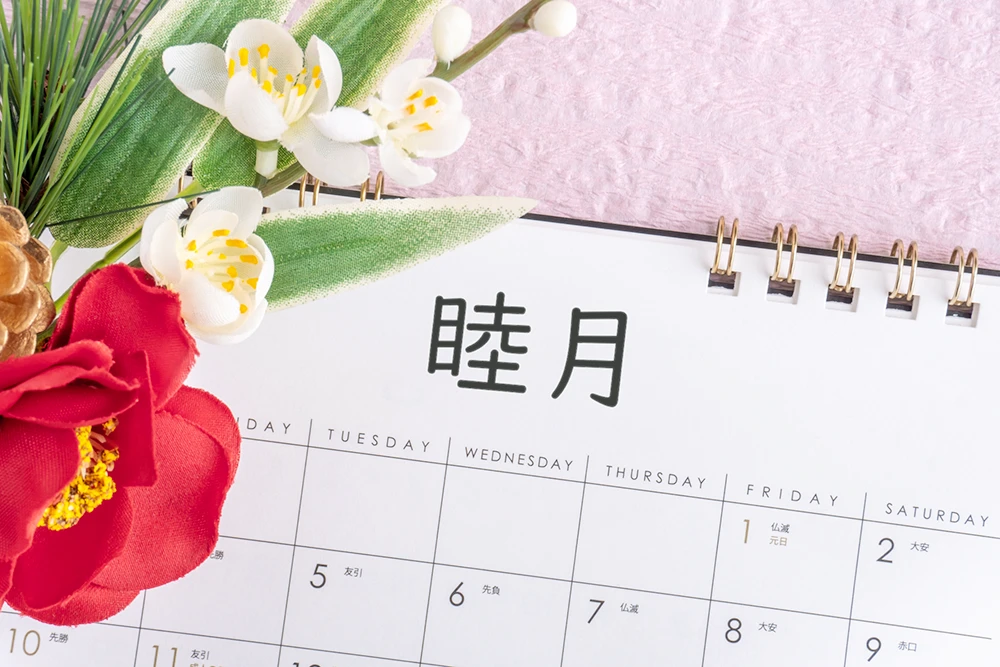
師走: Shiwasu, 神無月: Kannazuki, and More: The Traditional Japanese Names for the Months
Have you ever come across names such as “Mutsuki” (睦月) and “Shiwasu” (師走) that may not be familiar to you? These are called 和風月名: wafuu getsumei, the traditional Japanese names for the months.
In addition to numbering the months from January to December, Japan has a unique cultural tradition of expressing each month with beautiful names inspired by the seasons, customs, and events of the time.
In this article, we’ll explore what wafuu getsumei are, the origins of each name, when they are used, and some example sentences showing how they can be used.
An Overview of Wafuu Getsumei
Wafuu Getsumei are unique Japanese names given to each month from January to December, based on the old Japanese calendar. Since the old calendar differs from the calendar we use today by about a month, the seasonal associations of Wafuu Getsumei are slightly different from those of the months on the modern calendar.
For example, “Yayoi” (弥生), the traditional name for March, refers to the season when plants and trees begin to sprout. However, the seasonal feeling it conveys is said to be closer to that of April in the modern calendar.
The origins of Wafuu Getsumei can be traced back to the Nara period. The names are said to have already been used alongside descriptions of the months in the Nihon Shoki, Japan’s oldest historical chronicle, which was compiled in 720.
The Origins of Wafuu Getsumei
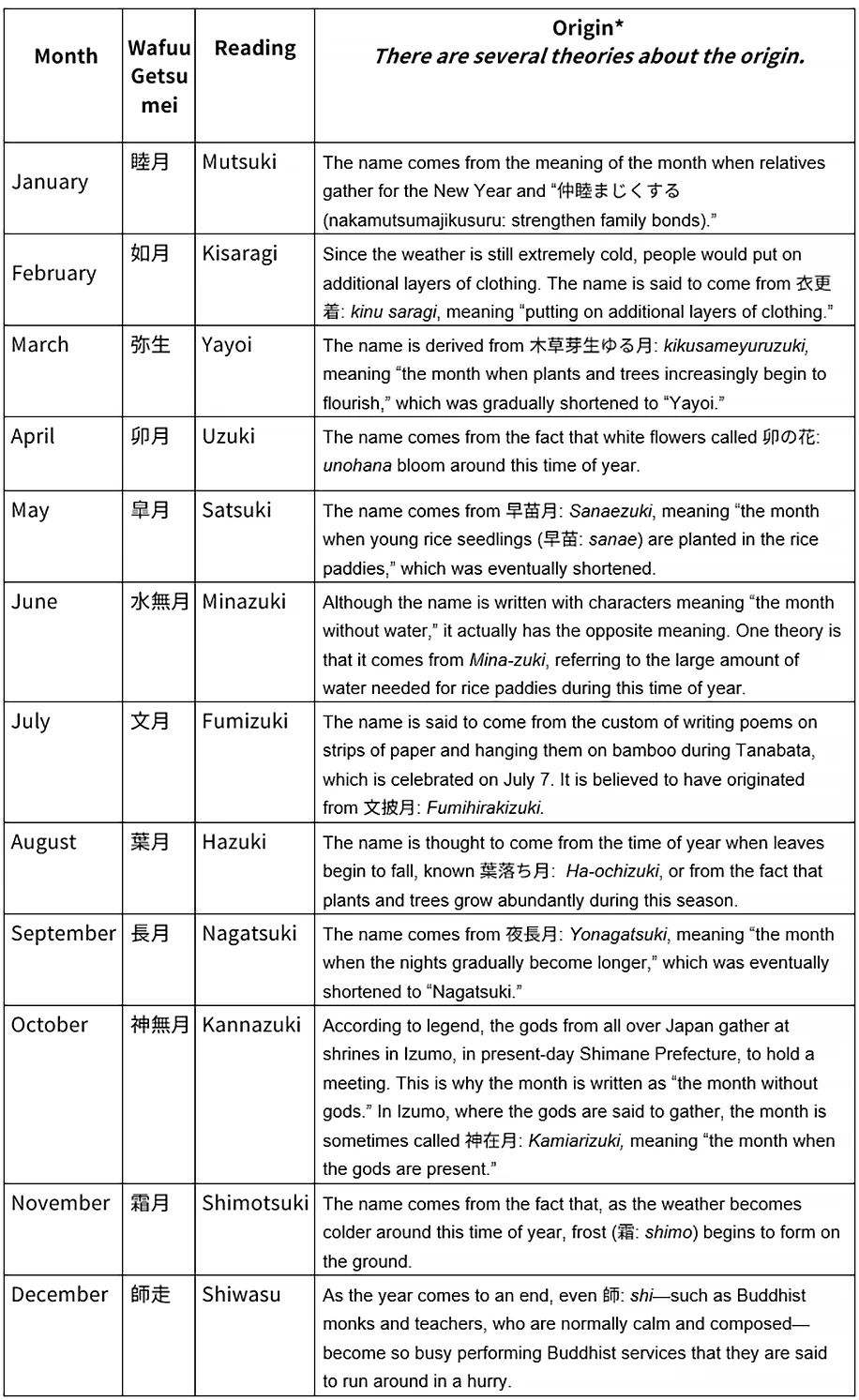
As shown above, each month from January to December has a beautiful name inspired by the climate, customs, and events of that particular time of year.
By learning about Wafuu Getsumei, learners can catch a glimpse into Japanese history and how people have viewed and connected with nature and everyday life over the years.
Tips for Remembering Wafuu Getsumei
Remembering all the Wafuu Getsumei can be challenging. One recommended way to remember them is to group them by season. For example, “Mutsuki, Kisaragi, and Yayoi” can be grouped as the beginning of spring, while “Minazuki, Fumizuki, and Hazuki” are associated with summer, and “Kannazuki, Shimotsuki, and Shiwasu” with winter. Remembering them in groups of three months at a time can make them easier to remember.
It can also be easier to understand the meanings of the names by remembering them together with the stories and origins behind them.
Common Uses of Wafuu Getsumei
Although Wafuu Getsumei are rarely used in daily life, they can be seen in specific settings such as:
・Seasonal greetings at the beginning of letters and emails (e.g., “Shiwasu no Kou”)
・Calendars and planners
・Literary works such as haiku and tanka that express Japan’s rich natural beauty and seasonal sentiments
・Event announcements at shrines and temples, introductions to traditional events, names of Japanese sweets, and more
They are particularly often used as seasonal greetings in business emails and formal letters. Knowing Wafuu Getsumei can also be useful as part of your knowledge of the Japanese language and culture.
Examples of Wafuu Getsumei in Everyday Conversations and Writing
Now, let’s take a look at some examples of how Wafuu Getsumei are actually used. Even knowing a few Wafuu Getsumei can give the impression of having a deeper understanding of Japanese culture. Try using them in letters or slightly more formal conversations.
・「もう師走ですね。今年も一年、早かったです。」
Mou Shiwasu desu ne. Kotoshi mo ichinen, hayakatta desu.
“It’s already December. This year went by so quickly, too.”
(Talking about the season)
・「葉月(8月)の候、皆様いかがおすごしでしょうか。」
Hazuki no kou, minasama ikaga osugoshi deshou ka.
“As Augusti arrives, I hope everyone is doing well.”
(A seasonal greeting at the beginning of a letter)
・「弥生の風が心地よい季節になりました。」
Yayoi no kaze ga kokochi yoi kisetsu ni narimashita.
“The breeze of March is making this a pleasant time of year.”
(Adding a sense of the season to a conversation)
As shown above, Wafuu Getsumei can be naturally incorporated into conversations and writing as seasonal greetings.
Discover Japanese Culture Through Seasonal Expressions
Wafuu Getsumei are more than just names for the months; they reflect Japanese people’s perspectives on nature and the wisdom rooted in everyday life. These names may seem a little intricate at first, but learning their meanings and origins can deepen your understanding of both the Japanese language and culture, making your learning journey more enjoyable. We hope you’ll continue learning Japanese while appreciating the seasons of Japan and the culture behind these expressions.
Where Language Meets Culture
At TCJ, we offer students opportunities to experience Japanese culture through school-organized events and other activities, alongside our in-person classes. Rather than simply memorizing words mechanically, learning about the culture and history behind them can deepen your interest in Japanese and make your learning journey even more rewarding. We look forward to welcoming you to our community of fellow learners!
SHARE ON



- Japanese tips
- 日本語学習
- Kanji
- Want to Learn Japanese
- Private Lesson
- Japanese for Expats
- International Student Visa Program
- Job Hunting in Japan
- Japanese Language School
- Email Phrases
- Business Japanese
- Keigo
- Japanese For Executives
- Japanese Manners
- Learn Japanese
- Japan Trivia
- Basic Japanese
- Japanese Culture
- Japanese Beginner
- Japanese Advanced
- Japanese Greetings
- Japanese Phrases
- Online Lesson
- JLPT
- Business & Daily Life Japanese Program
- ビジネス日本語
- Interview
- 日本語上級者

Top 5 Japanese Schools in Tokyo Recommended for Foreign Residents

3 Benefits of Japanese Language School vs. Direct University Admission