

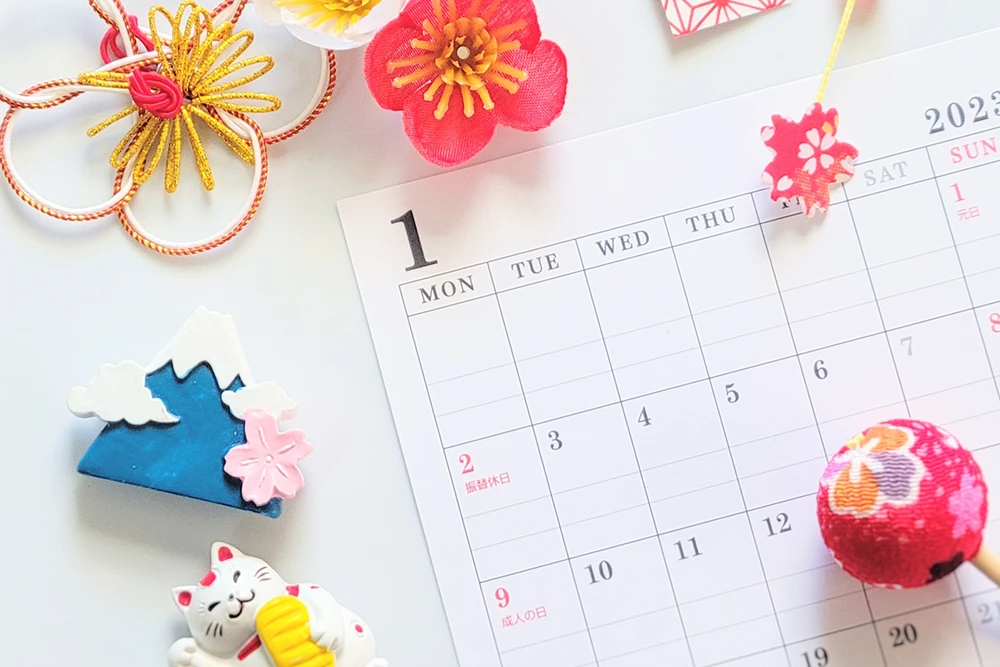
Japan’s Holidays: Discover the Culture Behind Each One

This article is intended for those residing in Japan, planning to visit, or interested in the Japanese language and culture. Japan’s national holidays are deeply rooted in its history and traditions.
We will examine the holidays observed in Japan in 2026, exploring the significance of each occasion, the cultural aspects associated with them, and ways to appreciate these special days. Familiarity with Japan’s holidays will not only enrich your experience during your stay but may also serve as a meaningful starting point for your journey into understanding Japanese culture and language.
All About Japan’s Holiday
There are various holidays in Japan throughout the year. Each holiday is not only a day off but also carries elements of Japanese history and culture, serving as an important factor in understanding the perspectives of the Japanese people. Most Japanese holidays are rooted in historical events or seasonal changes, and they are typically celebrated through traditions or ceremonies.
Currently, there are 16 national holidays in Japan. In their observance, there are two notable systems: 振替休日(furikae kyūjitsu) and 国民の休日(kokumin no kyūjitsu).
Furikae kyūjitsu (substitute holiday) is a system implemented when a national holiday falls on a weekend. In such cases, the following Monday is designated as an additional day off. Should that Monday also be a holiday, the day off is then moved to Tuesday.
Kokumin no kyūjitsu (citizens’ holiday) is a system that designates a weekday falling between two national holidays as a holiday as well, thereby creating opportunities for consecutive days off.
Thanks to these systems, extended holiday periods such as Golden Week(ゴールデンウィーク) and Silver Week(シルバーウィーク) have been established. Although many companies and schools close during the Obon season(お盆休み), which usually occurs in August, and the New Year period, the only official holiday among these is Ganjitsu (元日:January 1st).
Holidays in January through March
Let’s take a look at the national holidays in the period from January to March 2026.
1) 元日:Ganjitsu (New Year’s Day) – January 1
This holiday celebrates the New Year and is one of the most important days of the year. As part of New Year’s traditions in Japan, families typically gather with relatives to enjoy osechi, a selection of traditional Japanese dishes served only during the New Year, or to go for hatsumōde, the first visit of the year to a shrine or temple to pray for good fortune in the coming year.
2) 成人の日:Seijin no Hi (Coming of Age Day) – Second Monday of January
This holiday celebrates reaching adulthood for those who turn 20 years old that year, marking their self-awareness and responsibilities as adults. The ceremony, called seijin shiki, is organized by each city or region. People wear gorgeous furisode (long-sleeved kimono) or hakama (traditional pleated trousers/skirt) and celebrate this once-in-a-lifetime occasion.
However, due to the amendment of the Civil Code on April 1, 2022, the legal age of adulthood in Japan was lowered from 20 to 18. Nevertheless, many municipalities continue to hold the ceremony for those who turn 20 in the given year, taking into consideration that the age of 18 often coincides with the period for university entrance examinations or job hunting.
3) 建国記念の日:Kenkoku Kinenbi (National Foundation Day) – February 11
Kenkoku Kinenbi is the holiday that celebrates Japan’s foundation as a nation, often referred to as Japan’s birthday. It is a great opportunity to reflect on Japan’s long history and rich culture.
4) 天皇誕生日:Tennō Tanjōbi (Emperor’s Birthday) – February 23
This is the day to celebrate the birthday of the current Emperor of Japan. Each year on this day, ippan sanga (public greeting) is held at the Imperial Palace, where a large number of people gather to directly offer their congratulations to His Majesty the Emperor.
5) 春分の日:Shunbun no Hi (Vernal Equinox Day) – March 20 (in 2026)
This is the day when the length of daytime and nighttime are approximately equal, and it is a day to respect nature and honor one’s ancestors. The date changes every year due to the Earth’s orbit. Therefore, Shunbun no Hi in 2026 will fall on March 20.
Holidays in April through June
Next, here are the holidays from April to June in 2026. This season includes Golden Week, making it ideal for travel or leisure activities.
1) 昭和の日:Shōwa no Hi (Showa Day) – April 29
This day serves to reflect on the Shōwa period, which achieved recovery during a tumultuous era, and to contemplate the future of the nation. It also marks the birthday of Emperor Shōwa. The holiday was officially renamed Shōwa no Hi from Midori no Hi in 2007.
2) 憲法記念日:Kenpō Kinenbi (Constitution Memorial Day) – May 3
This holiday celebrates the enforcement of Japan’s current Constitution on May 3, 1947.
3) みどりの日:Midori no Hi (Greenery Day) – May 4
This day is observed as an occasion to express appreciation for and deepen one’s connection with nature. It was formally established as a national holiday in 2007.
4) こどもの日:Kodomo no Hi (Children’s Day) – May 5
To wish for children’s healthy growth and happiness, and to give thanks to mothers, this day is especially dedicated to boys. In their tradition, koinobori (carp-shaped flags) and kabuto (samurai helmet) are displayed, and they enjoy kashiwamochi (rice cakes wrapped in oak leaves). There is another celebration for girls called Hinamatsuri (Doll Festival), which is on March 3.
Holidays in July through September
Next, we explore the holidays in July, August, and September. As the season changes from summer to fall, you will encounter some holidays that are unique to Japan.
1) 海の日:Umi no Hi (Marine Day) – Third Monday of July
This holiday is to appreciate the blessings of the sea and to pray for the prosperity of Japan as a maritime nation. It evokes the feeling of summer, and various summer-themed events are held across Japan.
2) 山の日:Yama no Hi (Mountain Day) – August 11
This holiday was established to connect with and appreciate the nature of mountains. It is relatively new, having been created in 2016. It usually falls during Golden Week, and people often enjoy spending time with family in their hometowns and leisure activities on this day.
3) お盆:Obon (Obon season) – Usually August 13–16
Obon is a traditional Japanese event during which it is believed that ancestors who have passed away visit this world. Although it is not an official holiday, many companies and schools close during this period, making it effectively a long holiday. Typically, people visit their ancestors’ graves and attend Bon Odori (Bon dances), which are held locally in each region.
4) 敬老の日:Keirō no Hi (Respect for the Aged Day) – Third Monday of September
This holiday honors and respects elders who have contributed to society for decades, celebrating long and fulfilling lives. Families express their gratitude to grandparents and may give them gifts. Since 2003, due to the Happy Monday System, it has been observed on the third Monday of September.
5) 秋分の日:Shūbun no Hi (Autumnal Equinox Day) – September 23 (in 2026)
This day is when the length of daytime and nighttime is approximately equal, and it is a time to respect ancestors and pray for those who have passed. Like Vernal Equinox Day, the date changes every year. Shūbun no Hi in 2026 will fall on September 23.
In 2026, Silver Week will be a five-day holiday from Saturday, September 19 to Wednesday, September 23. This is because Keirō no Hi (Respect for the Aged Day) falls on Monday, September 21, and Shūbun no Hi (Autumnal Equinox Day) on Wednesday, September 23, with Tuesday, September 22 designated as a Citizens’ Holiday.
Holidays in October through December
At last, here are the holidays from October to December.
1) スポーツの日:Supōtsu no Hi (Sports Day) – Second Monday of October
This day is to enjoy sports and reflect on the importance of a healthy lifestyle. It commemorates the opening ceremony of the 1964 Tokyo Olympics, and the holiday’s name was changed to its current form in 2020.
2) 文化の日:Bunka no Hi (Culture Day) – November 3
This day is to appreciate culture and to love freedom and peace. It originates from November 3, 1946, the day when the Japanese Constitution was promulgated. Museums and art galleries are often open to the public for free on this day.
3) 勤労感謝の日:Kinrō Kansha no Hi (Labor Thanksgiving Day) – November 23
This day honors labor, celebrates production, and encourages citizens to show gratitude to one another. It originates from the traditional ritual called Niiname-sai, which celebrates the year’s harvest.
4) 年末年始 :Nenmatsu Nenshi (New Year’s Holiday) – Late December to Early January
Centered around Ganjitsu (January 1), this is a period when many people take time off. Although the only official holiday is New Year’s Day, companies and schools typically close from December 29 to January 3.
Level Up Your Japanese at TCJ
Learning about Japanese holidays is a great opportunity to deepen your understanding of both Japanese culture and language. At TCJ, we offer a variety of courses tailored to individual needs. With our experienced teachers, you can gain practical Japanese useful for daily life, business, or further studies in Japan, while also broadening your understanding of Japanese culture. Online lessons are also available! Please feel free to contact us.
Reference
Cabinet Office, Government of Japan. “About National Holidays.”
https://www8.cao.go.jp/chosei/shukujitsu/gaiyou.html
Government Public Relations Online. “National Holidays in 2025: What You Might Think You Know but Don’t About ‘National Holidays’ and Their Purpose and History.”
https://www.gov-online.go.jp/useful/article/202112/3.html
Wikipedia. “National Holidays (Japan).”
https://ja.wikipedia.org/wiki/%E5%9B%BD%E6%B0%91%E3%81%AE%E7%A5%9D%E6%97%A5

SHARE ON



- Japanese for Expats
- International Student Visa Program
- Job Hunting in Japan
- Japanese Language School
- Email Phrases
- Business Japanese
- Keigo
- Japanese For Executives
- Japanese Manners
- Learn Japanese
- Japan Trivia
- Basic Japanese
- Japanese Culture
- Japanese Beginner
- Japanese Advanced
- Japanese Greetings
- Japanese Phrases
- Online Lesson
- JLPT
- Business & Daily Life Japanese Program
- ビジネス日本語
- Interview
- 日本語上級者
- Japanese tips
- Kanji
- Want to Learn Japanese
- Private Lesson

4 Must-Have Apps for Everyday Life in Japan
Japan’s Iconic 抹茶(Matcha): Uncovering Myths and Reality