Popular Among Foreigners! Introducing Cool Kanji!

I often encounter Japanese learners who love kanji. They seem to enjoy writing them down or looking up their meanings when they come across intricate characters. Learners who love kanji tend to be able to name their favorite kanji immediately. Often, when they see words written in hiragana, they ask, “What’s the kanji for this?” When I asked them why they enjoy writing in kanji, they simply said, “Because it’s cool.”
Kanji is used on various items, such as T-shirts, tattoos, and stickers. I’ve even heard that there are accessories and social media stickers themed around “kanji that foreigners like.” In addition, shodō (Japanese calligraphy) experiences have become a popular activity among foreigners.
It is said that 2,136 kanji characters are used in daily life. Today, we introduce kanji that are especially popular among foreigners—ones they find cool.
Are These Kanji as Well?

The first kanji we introduce here are 凹凸 and 凸凹. Some may not think these are kanji, but yes, they are.
These kanji are read as 凹凸 (outotsu) and 凸凹 (dekoboko). Both have the same meaning, describing something uneven or having ups and downs. Their meanings are directly reflected in their shapes.
Top 3 Kanji Popular Around the World
According to a survey, the most popular kanji among foreigners are 愛, 夢, and 美. The reasons they like these kanji are “I like the meaning” and “It looks a little intricate, but it is well-structured and beautiful.

「愛」(Ai) – Love
A deep feeling of truly cherishing someone else.
The kanji 愛 (ai) is also read as 愛でる (mederu) and 愛しい (itoshii). 愛でる means to love or cherish, while 愛しい expresses a feeling of deep affection. The reading 愛 (ai) is simple and carries a gentle, loving image, which is why it is often used when naming children.
「夢」(Yume) – Dream
夢 (yume) has two main meanings:
- 夜、楽しい夢を見る。 (Yoru, tanoshii yume wo miru) – I have pleasant dreams at night.
- 私の夢は宇宙に行くことです。 (Watashi no yume wa uchū ni ikukoto desu) – My dream is to go to space.
夢 can also be read as “mu.” You can see this reading in words like 夢中 (mūchū), which means to be so focused on something that you forget everything else.
「美」(Bi) /「美しい」(Utsuku-shii) – Beautiful
美 (bi) means something that is attractive or lovely. There are several words used to describe someone beautiful, such as 美人 (bijin), 美女 (bijo), and 美男 (binan). 美人 is commonly used for women, while 美女 literally means “beautiful women” and 美男 means “beautiful men.”
美術 (bijutsu) refers to art, including forms such as painting, photography, and sculpture.
Kanji That Are Simple Yet Beautiful
While intricate kanji are popular among foreigners, these simpler-looking kanji are also widely appreciated.

「友」(Tomo / Yuu) – Friend
This is one of the kanji you learn at the beginner level. It is used in words like 友達 (tomodachi) – friends, and 親友 (shinyū) – best friends. These are essential words no matter where you are.
「心」(Kokoro / Shin) – Heart
This kanji has multiple meanings besides “heart,” such as “mind” and “spirit.”
- 心臓の手術をした。(Shinzo no shujutsu wo shita) – I had heart surgery.
- 心をこめて料理を作った。(Kokoro wo komete ryori wo tsukutta) – I cooked with all my heart.
「風」(Kaze / Fuu) – Wind
The structure of this kanji looks as if trees and grasses are swaying in the wind, evoking a sense of freedom. This kanji is commonly used in words or expressions that describe weather, such as 台風 (taifū) – typhoon, and 風が吹く (kaze ga fuku) – the wind blows. When you catch a cold, it’s 風邪 (kaze), which shares the same reading as 風 (kaze) by itself.
These are examples of expressions using the kanji “風”:
- 明日は明日の風が吹く。(Ashita wa ashita no kaze ga fuku)
– Tomorrow’s wind will blow tomorrow.
This is a Japanese proverb, meaning that each day brings its own challenges and opportunities, and it’s best to face them when they come.
- 「花鳥風月」(Kachofugetsu)
This phrase’s kanji—花 (flower), 鳥 (bird), 風 (wind), and 月 (moon)—describe everything beautiful in this world that exists within nature.
- 「風林火山」(Furinkazan)
This phrase means: When you fight, move as swiftly as the wind (風), be as silent as the forest (林), attack with the strength of fire (火), and remain as immovable as a mountain (山), regardless of the circumstances.
「道」(Michi / Do) – Road
This kanji means road, street, or path. It is used in words related to Japanese art, martial arts, and sports that require repeated practice over time, such as 書道 (shodō) – calligraphy, 茶道 (sadō) – tea ceremony, 柔道 (jūdō), 剣道 (kendō), and 武道 (budō) – martial arts.
「辶」(Shinnyo / Shinnyu)
The left part of the kanji 道 has an interesting-looking structure called “shinnyo” (辶), which represents a path and the concept of moving forward. I encounter many students who struggle with writing it because of its complicated and unique structure.
Kanji That Evoke a Sense of Japan
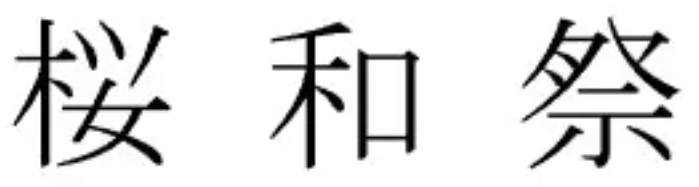
「桜」(Sakura / Ou) – Cherry Blossom
The kanji for Sakura (桜) is strongly associated with Japan, as the flower itself is a symbol of the country. Many people are drawn to this kanji simply because they love sakura. 桜吹雪 (sakura fubuki) refers to the scene where sakura petals are blown by the wind, resembling snowflakes falling. 秋桜 (kosumosu), literally meaning “fall sakura,” actually refers to the cosmos flower, which blooms in the fall. It is written this way because the petals of the cosmos flower resemble those of sakura. Cherry is written as 桜桃 (ōtō), with the literal meaning being “sakura” and “peach.”
「和」(Wa) /「和やか」(Nagoyaka) – Harmony / Peace
The kanji 和 resembles Japan in its meaning and use. For example, 和食 (washoku) refers to traditional Japanese cuisine, while 和室 (washitsu) refers to a classic Japanese-style room. In addition, the adjective 和やか (nagoyaka) is used in words like 平和 (heiwa) – peace, which refers to a state of no worries or conflicts, where everyone lives harmoniously.
「祭」(Matsuri / Sai) – Festival
We have various types of festivals in Japan. I believe that witnessing a Japanese matsuri can be an unforgettable experience when visiting or staying in Japan. Many of you might have seen the kanji 祭 on a 法被 (happi), a jacket worn during festivals, or on a うちわ (uchiwa), a fan.
Cool Kanji
Finally, let me introduce some kanji characters that are often considered “cool.” Their popularity may be influenced by anime, manga, or games. It’s also possible that their slightly complex shapes make them look even more stylish.

「龍」(Ryū / Tatsu) – Dragon
This kanji refers to a dragon. It is widely used in names that appear in anime or video games. It is also known as the god of water. Even though it is a mythical creature that no one has ever seen with their own eyes, it has gained a lot of popularity. It is said that when you turn the kanji 龍 sideways, it resembles the shape of a dragon. 龍 has two readings: りゅう (ryū) and たつ (tatsu), both of which mean “dragon.”
「忍」(Nin / Shinobi) – Stealth
The kanji 忍 refers to enduring or persevering through difficult situations. Its popularity is likely due to its association with the term 忍者 (ninja). Ninjas were known for performing tasks in secrecy, much like spies. Is this concept well-known in your country as well?
「魔」(Ma) – Demon
While this kanji may resemble something scary, as it is used in words like 魔法 (mahō) – spell, 魔界 (makai) – demon world, 魔女 (majo) – witch, and 悪魔 (akuma) – devil, its intricate appearance has contributed to its popularity.
According to a community website for foreigners who love kanji, called “Your favourite kanji” the kanji 魔 has become highly popular recently. Similar kanji, such as 鬼 (oni) and 魂 (tamashii), are also gaining popularity. 鬼 refers to an ogre, and it is not only associated with fear but also with strength, kindness, intriguing characteristics, and sometimes a sense of loneliness.
Let’s Learn Japanese at TCJ
Today, we introduced kanji that are popular among foreigners. Personally, I found it interesting that more intricate and complicated kanji tend to be more popular. It might be a good idea to discuss your favorite kanji or your name in kanji with your classmates or teachers. At TCJ, we offer a variety of support to help you continue learning Japanese. You can always schedule a counseling session or take a tour of our actual classes before deciding to enroll. Please feel free to reach out to us if you’re interested in learning Japanese.
<References>

SHARE ON


- Business & Daily Life Japanese Program
- Interview
- Japanese tips
- Kanji
- Want to Learn Japanese
- Private Lesson
- Japanese for Expats
- International Student Visa Program
- Job Hunting in Japan
- Japanese Language School
- Email Phrases
- Business Japanese
- Keigo
- Japanese For Executives
- Japanese Manners
- Learn Japanese
- Japan Trivia
- Basic Japanese
- Japanese Culture
- Japanese Beginner
- Japanese Advanced
- Japanese Greetings
- Japanese Phrases
- Online Lesson

Japanese Words Originating from Martial Arts

JLPT N4 Comprehensive Overview 2025: Difficulty, Content, and Effective Study Strategies