

Temples and Shrines: What’s the Difference?
寺(Tera: Temples) and 神社(Jinja: shrines) can be found throughout Japan. They are often recognized by rows of red torii gates, peaceful buildings, and large bells. Both temples and shrines are deeply connected to Japanese culture and history, but many people are unsure of the differences between them. In fact, even some Japanese people find it difficult to explain exactly how they differ.
In this article, we will explore the differences between temples and shrines, as well as their roles in Japanese culture and the ways Japanese people connect with them in everyday life.
The Presence of Temples and Shrines in Japan
Japan is home to a large number of temples and shrines. It is said that there are approximately 80,000 shrines and 70,000 temples across the country. They can be found not only in towns and cities, but also on mountaintops, near the sea, and even in small villages. As a result, it is common to see temples and shrines as part of everyday life in Japan.
Well-known temples include Todai-ji in Nara and Kiyomizu-dera in Kyoto. Many tourists visit these temples to see the Great Buddha statue at Todai-ji, beautiful gardens, and historic buildings.
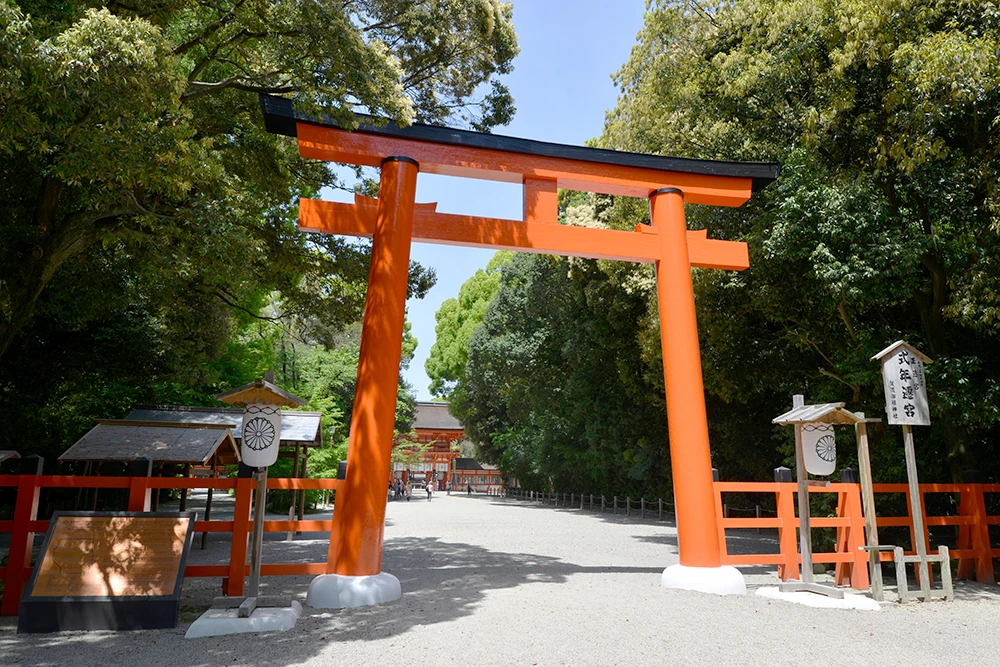
Famous shrines include Fushimi Inari Taisha in Kyoto and Meiji Jingu in Tokyo. The sight of countless red torii gates lined up in rows is one of Japan’s most iconic landscapes and attracts visitors from around the world.
Temples and shrines are not just sightseeing spots. Matsuri (Japanese festivals) and other events often take place there, and local people gather at these sites, as they have long been closely connected to the daily lives of local people.
Differences between Temples and Shrines
One of the biggest differences lies in what is worshipped.
Shrines are places for Shinto, Japan’s indigenous religion. In 神道(Shinto), people worship 神(kami: spirits or deities). These deities can be associated with nature or ancestors, and are believed to possess a power greater than that of humans. It is believed that mountains, rivers, trees, and the sun are inhabited by kami.
In contrast, temples are places of worship for 仏教(Bukkyo: Buddhism), which was introduced to Japan from countries such as China about 1,500 years ago. Buddha statues are often seen at temples, where Buddhist monks practice their training and recite sutras.
Differences in Appearance
Shrines are characterized by 鳥居(Torii: torii gates), which mark the entrance to the sacred world of the kami. In addition, visitors purify their hands and mouths with water before praying, a ritual known as 手水(Chozu).
In contrast, temples often have a 山門(sanmon: temple gate) and a large bell. A large incense burner is also commonly placed in front of the main hall. At temples, worshippers light incense and recite sutras as part of their prayers.
Differences in Worship Practices
In general, visitors follow a ritual called “二礼二拍手一礼(Nirei NIhakushu Ichirei: two bows, two claps, and one bow)” when praying at shrines. The procedure is quite simple, and visitors are encouraged to remember the correct order before visiting.
- Bow slightly before passing through the torii gate.
The torii is considered the entrance to the sacred world of the kami. - Purify your hands and mouth at the chozuya (purification fountain).
Using a ladle, wash your left hand, then your right hand, and finally rinse your mouth lightly. - Stand in front of the offering box and place your offering inside.
It is customary to do so quietly. - Ring the bell if one is provided.
This is believed to announce your arrival to the kami. - Perform the ritual of “two bows, two claps, and one bow.”
• Bow deeply twice.
• Clap your hands twice.
• Offer a prayer or express gratitude silently.
• Finish with one final deep bow. - Bow slightly again before leaving through the torii gate.
Sometimes, the ritual differs depending on the shrine. For example, at Izumo Taisha, visitors follow a ritual of “二礼四拍手一礼(Nirei Yonhakushu Ichirei: two bows, four claps, and one bow).”
On the other hand, there is no standardized prayer ritual practiced at temples across Japan. People typically put their hands together and pray quietly without clapping.
However, Shinto and Buddhism have long coexisted in Japan, and in some cases, it can be difficult to determine whether a place is a shrine or a temple. In most cases, Japanese people do not focus too much on the details of the rituals. Rather, they place importance on expressing gratitude and showing respect through prayer.
Visiting Temples and Shrines as a Cultural Practice
Visiting shrines and temples remains a common practice in Japan today.
One of the most well-known traditions is 初詣(Hatsumode), the first shrine or temple visit of the year. During Hatsumode, people visit a temple or shrine, usually on or shortly after New Year’s Day, to pray for good health, happiness, and good fortune in the coming year. Every New Year holiday season, temples or shrines across Japan are crowded with visitors.
In addition, temples and shrines are often visited by those praying for success in entrance examinations, career achievements, or the health and safety of their families. They are also popular destinations for travelers seeking to explore Japan’s cultural and historical heritage.
Furthermore, temples and shrines are deeply connected to important stages in Japanese people’s lives. For example, they are visited after the birth of a baby, for 七五三(Shichi-Go-San celebrations), weddings, funerals, and お盆(Obon).
Weddings are often held at shrines, while funerals are commonly held at temples. In this way, Japanese people remain naturally connected to temples and shrines throughout important stages of life, even without strongly focusing on religion itself.
In recent years, the number of foreign visitors has also been increasing. According to news reports, during this year’s New Year period at Meiji Jingu Shrine, roughly half of the visitors were from overseas.
The growing popularity of Hatsumode among international visitors appears to be driven by a variety of reasons, such as the desire to experience Japanese culture, interest in temples and shrines, or simply enjoying the festive atmosphere rather than the religious meaning itself.
Japanese anime has also influenced and encouraged visitors. Popular titles such as “君の名は。(Your Name)” and “ラブライブ!(Love Live!)” have become popular partly because of scenes featuring shrines and Hatsumode. Some visitors come to Japan for “聖地巡礼(seichi junrei: pilgrimage to real-life locations from anime)” and visit the shrines that appear in these works. Some may simply visit the locations where the works are set and happen to experience Hatsumode, which can feel very memorable as it represents something typically Japanese. Some are even surprised to see large crowds at Hatsumode, especially when they learn that Japanese people, who are often seen as not strongly religious in daily life, still gather in large numbers on such occasions.
In many countries, it is common to ask someone about their religion. However, many Japanese people may answer “none,” even though traditions involving temples and shrines remain deeply rooted in everyday life and are visited occasionally as part of cultural practice.
Temples and Shrines in Everyday Japanese Life
To people in Japan, temples and shrines are not just places for worship; they are also places where people can calm their minds and feel the changing seasons.
In spring, cherry blossoms bloom, and in autumn, the leaves change color. These seasonal views are enjoyed by many visitors. In particular, temples and shrines in Kyoto are well known for their seasonal beauty throughout the year.
In addition, 祭り(matsuri: Japanese festivals) are often closely connected to shrines. During summer festivals, food stalls line up around shrines, and taiko drumming and dances are performed. People of all ages, from children to the elderly, take part in these events.
Temples also play an important role in honoring ancestors. During the Obon season, families often visit graves to offer prayers. This period is widely regarded as a meaningful time to express gratitude to ancestors and loved ones who have passed away.
The uniquely Japanese atmosphere of temples, with their quiet gardens and historic buildings, has also attracted visitors from around the world. Some temples offer experiences such as zazen (Zen meditation) and shakyo (sutra copying), providing visitors with memorable opportunities to deepen their understanding of Japanese culture.
A great deal of Japanese values and perspectives on nature can be observed through visits to temples and shrines. These places are more than religious sites; they are special spaces where people can experience the unique elements of Japanese culture, including a love of nature, a sense of gratitude, and an appreciation for peace and quiet.
Discover Japan More Deeply with TCJ
When learning Japanese, learners will naturally encounter words and cultural concepts related to temples and shrines. Becoming familiar with culture-specific terms such as omairi (visiting a shrine or temple), omamori (protective amulets), torii (shrine gates), and omikuji (fortune slips) can deepen one’s understanding of Japanese culture.
Beyond language itself, Japanese study also offers opportunities to explore customs and expressions that cannot be fully understood through textbooks alone. Participating in seasonal events and local festivals can provide valuable experiences and create meaningful interactions with native speakers.
Understanding Japanese culture and ways of thinking is just as important as learning the language. Cultural knowledge can enrich communication and help learners connect more deeply with Japanese people and society.
In many ways, understanding the differences between temples and shrines is a first step toward understanding Japan itself. We encourage learners to visit Japan, experience its history and culture firsthand, and continue their journey of discovery through Japanese language study at TCJ.

SHARE ON



- Japanese For Executives
- Japanese Manners
- Learn Japanese
- Japan Trivia
- Basic Japanese
- Japanese Culture
- Japanese Beginner
- Japanese Advanced
- Japanese Greetings
- Japanese Phrases
- Online Lesson
- JLPT
- Business & Daily Life Japanese Program
- ビジネス日本語
- Interview
- 日本語上級者
- Japanese tips
- Kanji
- Want to Learn Japanese
- Private Lesson
- Japanese for Expats
- International Student Visa Program
- Job Hunting in Japan
- Japanese Language School
- Email Phrases
- Business Japanese
- Keigo

4 Must-Have Apps for Everyday Life in Japan
Japan’s Iconic 抹茶(Matcha): Uncovering Myths and Reality