What to know before your first Japanese business meeting

If you’re planning to attend your very first business meeting in Japan, you likely have many questions about what to do and what not to do. Japanese business culture is deeply ingrained in society, and it’s good to be aware of the customs and etiquette to help make a positive impression on your potential business partners or colleagues.
Keep in mind that these are things that are ‘good to know,’ and are not necessarily mandatory. Japanese people will also respect your culture and background, so it’s ok to make mistakes or do things a little differently. Your Japanese colleagues will appreciate the effort you put into understanding the local work culture.
So with that said, let’s get into what to know before your first Japanese business meeting.
Japanese business etiquette
Punctuality is highly valued in Japanese business culture, and society in general. Arriving at least a few minutes early is considered the norm, as it demonstrates your professionalism and respect for others’ time. Tardiness is generally frowned upon and may be perceived as a sign of disrespect.
Do what you can to arrive early, allowing time for unforeseen circumstances like traffic delays or getting lost. Familiarize yourself with the meeting location, transportation routes, and potential delays. Being punctual not only reflects your consideration but also allows you to gather your thoughts and do any last-minute preparations.
Hierarchy is also an essential aspect of the business culture. It’s crucial to show respect for the hierarchical structure of the company you are meeting with. The seniority system in Japan is based on experience and rank, and it’s best to familiarize yourself with the rank of the people you are meeting with beforehand, as it is considered respectful to address people in order of seniority.
Keigo, or the honorific form of Japanese, is another important aspect of working in Japan. Using formal phrases and honorifics is a key part of business communication, especially when speaking with clients. For essential keigo phrases to use at work, please see our article here.
And don’t let your “meishi,” or business cards, fall by the wayside. Ensure you have a sufficient supply of business cards with your name, title, and contact information in both English and Japanese. We will explain how to exchange and receive business cards in more detail below.
Preparing for a Japanese business meeting
A few days before the meeting, prepare an agenda to guide the discussion and maintain a structured flow. Japanese people tend to prefer having a clear meeting structure, and having an agenda helps to ensure that all important points are covered. It can also help calm your nerves, especially if this is one of your first meetings in a new country and culture. Share the agenda with your Japanese counterparts in advance to allow them to prepare and provide input.

Although there are differences depending on the company, there may be certain expectations around appearance. It’s a good idea to dress in business casual or business professional attire, especially for the first meeting.
Prepare your business cards and a business card holder to present and receive cards during the meeting. It is customary to carry a business card holder with you in order to keep your own cards, as well as the cards you receive, organized and in pristine condition. Your business card should ideally have both English and Japanese versions.
Take the time to research the company and the individuals you will be meeting with. In Japan, Facebook is the preferred social media platform for business connections. LinkedIn is also used, although it is less popular. Take a look at your counterparts’ Facebook or LinkedIn pages to learn more about them. You can also take a look at the company website, as you may find a bio on the people you are meeting with. Trust is an important aspect of business in Japan, and demonstrating your interest and commitment to your counterparts can help build that trust.
Before, during, and after the meeting
How you enter the meeting room is very important. Stay standing until the other party arrives and wait to be seated, as the seating arrangement is also an important aspect of the meeting. If the other party is already in the room, knock before entering.
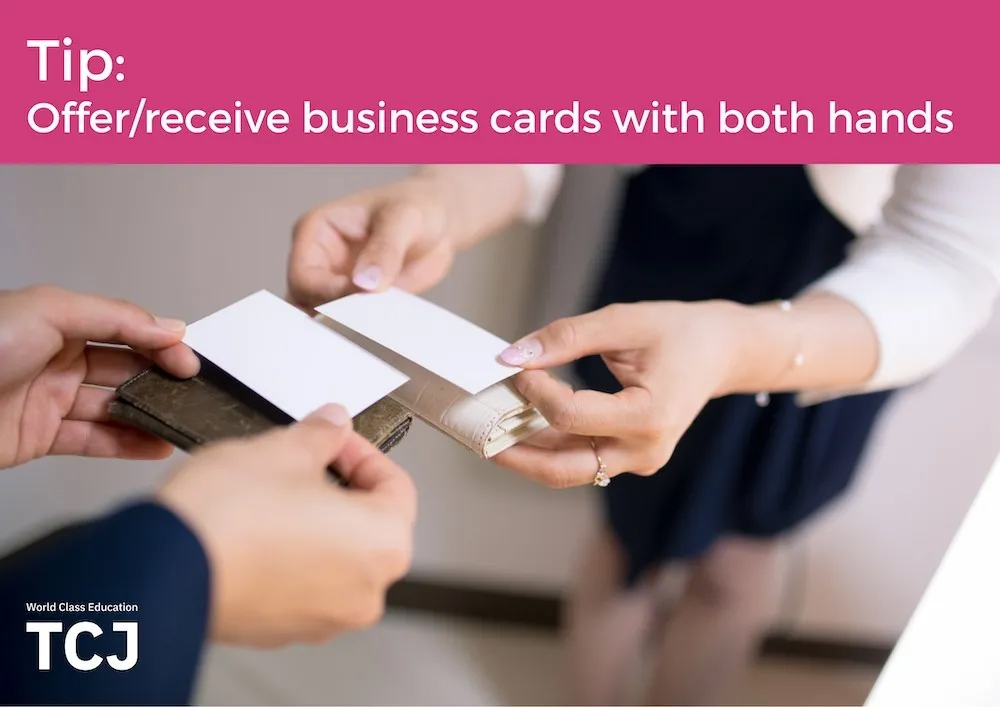
When exchanging cards, present yours with both hands, card facing the recipient, and bow. Receive the other person’s card with equal care, with both hands while bowing. Study it briefly and display each card individually on the table to show your respect. Avoid placing the card in your pocket or writing on it, as these actions are considered disrespectful.
It’s also a good idea to take notes. This shows your attentiveness and commitment to what is being discussed.
When the meeting concludes, it is customary to express gratitude and bid farewell. Bow slightly and say “ありがとうございます” (arigato gozaimasu; thank you) or “失礼いたします” (shitsurei itashimasu; please excuse me) before you leave the room. The other party may follow you out to the elevator – if so, bow once you are inside the elevator and continue bowing until the elevator doors close.
For more information on the different ways to greet or part ways in Japanese, please read our article here.
Get fully prepared for Japan’s business world with TCJ
Although the etiquette and rules may seem like a lot to learn, remember that it’s natural to make mistakes! What’s important is showing your effort to understand the culture. With time, you will master all of the points listed in this article and gain more and more confidence in the Japanese business world.
At TCJ, we offer comprehensive Japanese language courses that cover various aspects of business Japanese, including language skills and cultural understanding. Our students learn phrases and grammar frequently used in business, email and document writing tips, business etiquette, job hunting tips and more. Our experienced instructors can guide you in mastering the language and etiquette necessary for successful business relationships in Japan. To learn more about our courses and how we can help you excel in the Japanese business world, please visit our website or contact us directly.

SHARE ON


- Interview
- Japanese tips
- Kanji
- Want to Learn Japanese
- Private Lesson
- Japanese for Expats
- International Student Visa Program
- Job Hunting in Japan
- Japanese Language School
- Email Phrases
- Business Japanese
- Keigo
- Japanese For Executives
- Japanese Manners
- Learn Japanese
- Japan Trivia
- Basic Japanese
- Japanese Culture
- Japanese Beginner
- Japanese Advanced
- Japanese Greetings
- Japanese Phrases
- Online Lesson
- Business & Daily Life Japanese Program

Japanese Words Originating from Martial Arts

JLPT N4 Comprehensive Overview 2025: Difficulty, Content, and Effective Study Strategies