
Experiencing Japanese Onsen: History, Etiquette, and the Spirit of Open and Honest Connection
Japanese 温泉:onsen, or hot springs, are among the experiences many international students and visitors look forward to when coming to Japan.
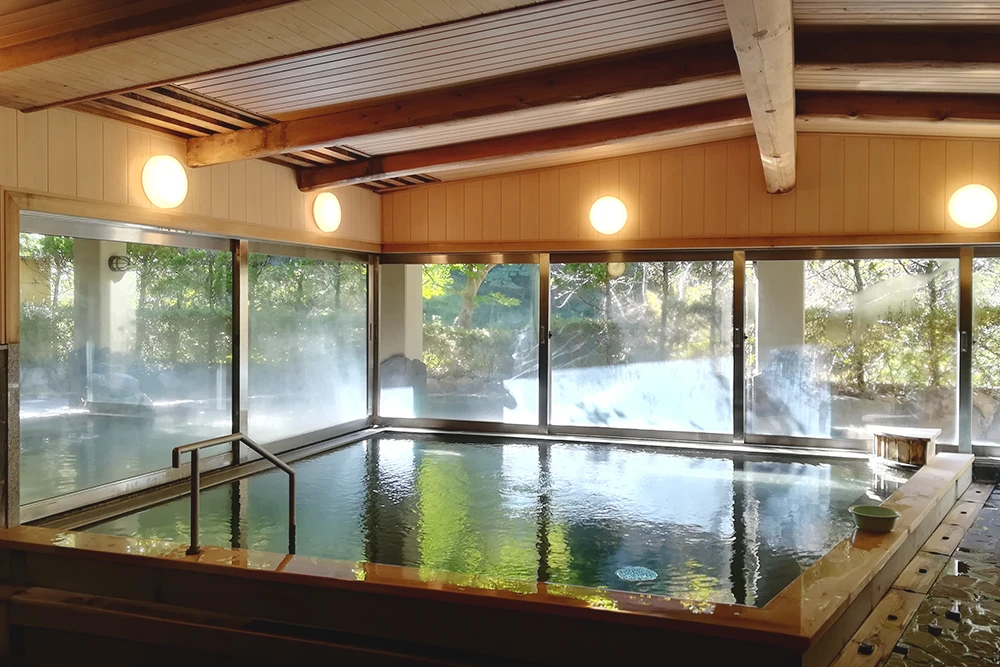
The distinctive scent of sulfur rising through the steam and the soothing sensation of warm water relaxing the entire body make onsen a special part of Japan’s landscape and culture.
This article explains how to enjoy onsen in Japan, along with the unique cultural values and traditions associated with them, in an easy-to-understand way. As you read, imagine yourself enjoying a relaxing soak and experiencing one of Japan’s most cherished traditions.
Onsen: Connecting with the Heart of Japanese Culture
Japan is blessed with an abundance of hot springs, a result of the country’s active volcanic landscape. From Hokkaido in the north to Kyushu in the south, onsen can be found in nearly every region of the country.
In Japan, onsen are more than just places to wash the body. They are cherished spaces where people can relax both physically and mentally while appreciating the beauty of nature. In other words, onsen can be considered sanctuaries of relaxation that have long been treasured by the Japanese people. Visiting an onsen offers not only a chance to unwind, but also an opportunity to experience Japanese culture and the warmth of its people, making it a memorable part of any stay in Japan.
History and Culture: Japan’s Deep Connection with Onsen
From Sacred Springs to Healing Traditions
Japan’s onsen culture has a long and rich history. In ancient times, people regarded places where hot spring water naturally emerged as sacred gifts from the gods.
This belief eventually gave rise to 湯治: Toji, a traditional practice of staying at an onsen for several weeks or even months to recover from illness or injury. Before modern medicine became widely available, many people believed in the healing power of onsen and sought to restore their health through nature. This tradition reflects the wisdom of living in harmony with nature and forms the foundation of Japan’s onsen culture.
The Healing Philosophy Behind Onsen
Onsen contain a variety of naturally occurring minerals, each with its own unique characteristics. Some are known as 美肌の湯: bihada no yu (“beauty baths”) because they are believed to leave the skin feeling soft and smooth, while others are valued for helping relieve fatigue. These are referred to as the 効能: kōnō, or therapeutic properties, of an onsen, which vary depending on its mineral composition. For example, sulfur springs are believed to help smooth the skin, while carbonated springs are said to promote blood circulation.
Simply bathing in an onsen cannot cure every illness or symptom. However, soaking in warm mineral-rich water, spending time in a peaceful natural setting, and allowing both the mind and body to unwind can be deeply restorative. The sense of relief, the unhurried pace of time, and the overall atmosphere are all believed to support the body’s natural healing ability. This philosophy is one of the reasons why onsen have been cherished by the Japanese people for generations.
Japan’s Unique Culture: The Spirit of Open and Honest Connection
In Japan, there is a unique concept known as hadaka no tsukiai. Its literal meaning is “naked companionship,” referring to the idea of bathing together without clothes. However, its true meaning goes far beyond that. This way of thinking is deeply rooted in Japanese culture.
This concept suggests that once everyone is in the same state—without clothes—job titles, income, and age no longer matter. People simply share the warm water as equals, as human beings.
By showing their true selves, it becomes easier for people to connect from the heart. This is the core concept of 裸の付き合い: hadaka no tsukiai. True bonds are formed only when people connect with an unpretentious heart. One of the reasons onsen have long been cherished in Japan is the sense of equality and freedom they create.
Onsen Isn’t Just for Humans: Stories of Animals and Hot Springs
Have you ever seen monkeys bathing in an onsen?
The Japanese macaques (ニホンザル: nihonzaru) at 地獄谷野猿公苑(じごくだにやえんこうえん: Jigokudani Monkey Park) in Nagano Prefecture are famous worldwide. During snowy winters, they soak in hot springs with their bodies submerged up to their shoulders, often relaxing with their eyes gently closed. This scene, known as the “snow monkeys,” has been widely featured in international media, making it a popular tourist attraction around the world.
Animals that love onsen are not limited to monkeys. In Japan’s onsen history, there are many legends of wounded deer and birds entering hot springs to heal their injuries.
In recent years, capybaras in zoos soaking in hot springs have also become popular, attracting visitors from all over the world.
It is believed that animals bathe in hot springs to stay warm during the cold winter. Like humans, they also benefit from nature’s gifts. At onsen across Japan, heartwarming scenes like these can often be seen, reminding us that both humans and animals share the blessings of nature and live together in harmony.
Before You Go: How to Enjoy Onsen and Today’s Etiquette
Onsen are public bathing facilities enjoyed by people of all ages and backgrounds. To ensure that everyone has a pleasant experience, there are a few etiquette rules to keep in mind before visiting.
Rinsing Before You Soak and Proper Towel Etiquette
First, before entering the bath, be sure to rinse your body thoroughly. This is an important part of onsen etiquette, as it helps keep the bath clean and shows consideration for other guests.
Second, remember to keep your towel out of the bath. Since towels are used to wash your body, they should not be placed in the bathwater. It is common to leave your towel on the side of the bath or place it on your head while soaking.
Keep these general etiquette rules in mind when visiting an onsen in Japan:
– Avoid talking loudly or making excessive noise in the bath.
– Do not bring recording devices, such as smartphones or cameras, into the bathing area.
– If you have a tattoo, be sure to check the onsen’s tattoo policy in advance.
Today’s Onsen and Changing Etiquette
Onsen customs and etiquette have gradually evolved over time. In the past, 混浴: konyoku (mixed-gender bathing) was common throughout Japan. Today, however, it has become much less common and is rarely seen.
Instead, most onsen now offer separate bathing areas for men and women, while some have baths that are available to each gender at different times of the day. If you are staying at a Japanese ryokan with an onsen, be sure to check the bathing schedule and the location of each bath before your visit.
In recent years, 湯あみ着: yuamigi (bathing clothes) have become increasingly accepted at some onsen. These garments are specially designed for bathing, and the number of onsen that allow them continues to grow. They provide a comfortable option for people who are not comfortable bathing without clothing or who would like to experience konyoku.
Private onsen have also become a popular choice for families, couples, and groups of friends. They are ideal for those who prefer to enjoy the relaxing atmosphere of an onsen in a more private setting.
As onsen continue to evolve, many now offer a variety of bathing options to suit different needs and preferences. Before your visit, be sure to check the facilities and available plans to find the experience that best suits you.
Must-Visit Onsen Destinations in Japan: 3 Iconic Hot Springs
There are many hot springs throughout Japan. These three destinations are excellent choices for your first onsen experience.
Kusatsu Onsen, Gunma
Kusatsu is regarded as one of Japan’s “Three Famous Hot Springs.” At the heart of the town lies 湯畑: Yubatake (“hot water field”), a unique facility where steaming hot spring water flows through wooden channels, creating a mystical and atmospheric scene. At night, the area is beautifully illuminated, making the landscape even more enchanting. The traditional 湯もみ: yumomi performance, a method of cooling the hot spring water, is also a must-see experience.
Beppu Onsen, Oita
Beppu is one of Japan’s most famous hot spring cities, known for having one of the highest volumes of hot spring water and the largest number of sources in the country. One of its most iconic attractions is the “Hells of Beppu” (地獄めぐり: Jigoku Meguri), a tour of vividly colored hot springs such as “Blood Pond Hell” and “Tornado Hell.” With a wide variety of spring types, Beppu is beloved by true onsen enthusiasts as well as first-time visitors.
Kinosaki Onsen, Hyogo
Kinosaki Onsen is often described as a living image of a traditional Japanese hot spring town, with willow-lined streets and stone pavements creating a nostalgic atmosphere. After checking into a 旅館: ryokan, visitors can stroll through the town in a yukata and wooden geta sandals, enjoying the famous 外湯めぐり: sotoyu meguri—visiting the seven public bathhouses scattered throughout the town. Kinosaki is also known for its literary history, as writer Naoya Shiga stayed here and wrote some of his works, adding a cultural and artistic charm to the town.
Useful Japanese Phrases for Visiting Onsen
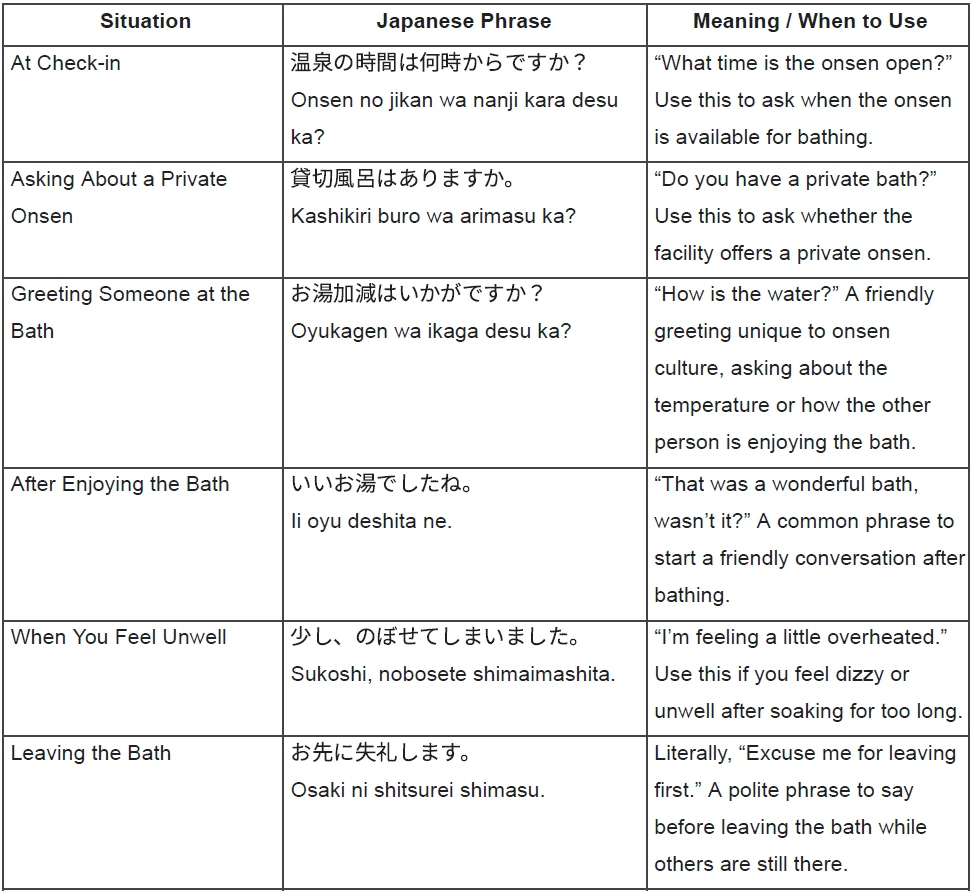
Now, let’s explore some useful Japanese phrases for visiting onsen towns. Using these expressions can help you communicate more naturally and build closer connections with local people.
Make the Most of Your Onsen Experience
Onsen is more than just a place to soak in. It is a place where you can step away from the busyness of everyday life, reconnect with yourself, and sometimes even connect with complete strangers. Above all, it offers a truly enriching experience that stays with you long after you leave.
For those studying Japanese, onsen can be a place to connect with local people beyond language itself. Your Japanese doesn’t have to be perfect—even a simple phrase like “Ii oyu desu ne” can spark a warm connection. We hope you’ll discover your own favorite onsen in Japan and, before you know it, find yourself falling even more in love with the country.
Discover Natural Japanese with Your TCJ Teacher
There are Japanese words and phrases that are only used in specific situations, such as at onsen or while traveling. Even native speakers rarely use them in everyday life, but if you can use them naturally, they become “killer phrases” that help you build deeper connections with others.
At TCJ, our teachers come from a wide range of backgrounds, with diverse hobbies and professional experience. We encourage you to ask them about the most natural and situation-appropriate expressions. It will surely help you improve your Japanese in a fun and practical way.
SHARE ON



- Japanese for Expats
- International Student Visa Program
- Job Hunting in Japan
- Japanese Language School
- Email Phrases
- Business Japanese
- Keigo
- Japanese For Executives
- Japanese Manners
- Learn Japanese
- Japan Trivia
- Basic Japanese
- Japanese Culture
- Japanese Beginner
- Japanese Advanced
- Japanese Greetings
- Japanese Phrases
- Online Lesson
- JLPT
- Business & Daily Life Japanese Program
- ビジネス日本語
- Interview
- 日本語上級者
- Japanese tips
- Kanji
- Want to Learn Japanese
- Private Lesson

4 Must-Have Apps for Everyday Life in Japan
Japan’s Iconic 抹茶(Matcha): Uncovering Myths and Reality