

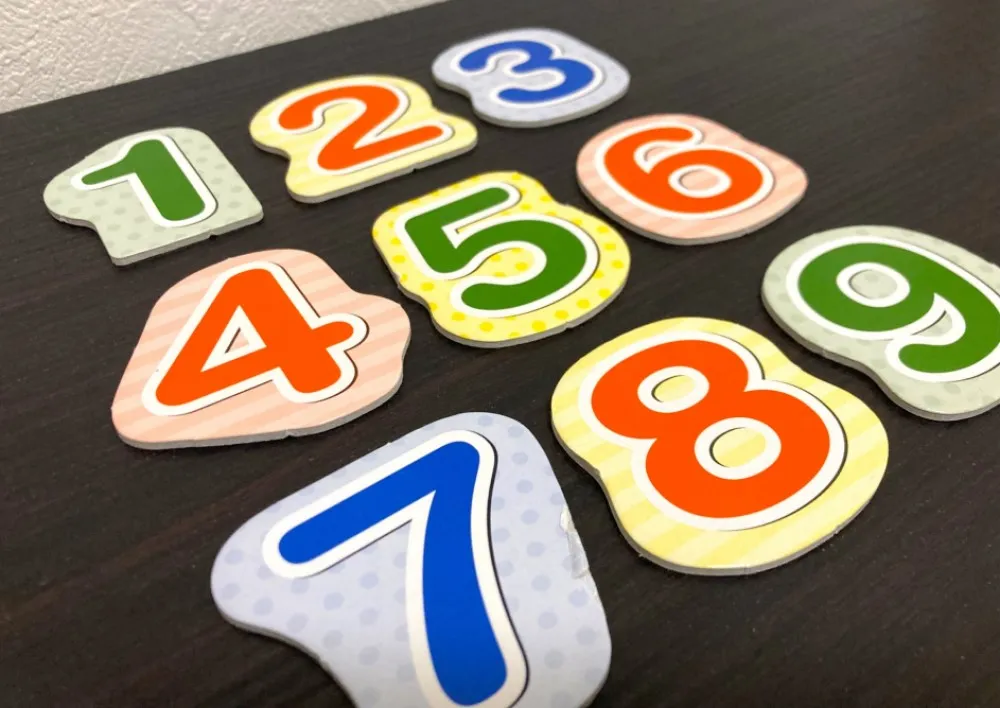
Difficult Japanese Words: Numbers And the Way to Count Them

It is said that the way to count numbers in Japanese is difficult. Sometimes we can read the explanation of each word. But there are few books that explain the reason. Therefore, this time, we have summarized numbers and how to count them in Japanese in an easy-to-understand manner to help you.
Historically, the Japanese language has two ways to count numbers. One, it is words of Chinese origin. It came from China with Chinese characters. It is the one most commonly used in modern-day Japan.

*4(yon) and 7(nana) is the way of 【Japanese origin】. 9(kyu) is the word that came from China after (ku).
Japan Imported Letters from China
Japanese has been spoken in the Japanese archipelago since ancient times, and there was a way to count. However, they do not have letters to put in writing to leave a record. Then, letters (Chinese characters) were adopted from China, which had had an overwhelmingly advanced culture in East Asia for several thousand years. And Japanese people began to write Japanese using Chinese characters. For example, this Chinese character “山” is read “yama” (meaning “mountain” in Japanese), while it is called “san” borrowed from the Chinese sound at that time. So, each Chinese characters used in Japan has two ways of pronunciation, “訓読み: kunyomi” express the meaning, and “音読み: onyomi” express the sound.
However, since Chinese characters are basically letters of Chinese, there are various inconveniences when writing Japanese that is a different language style. So, Japanese original letters, “片仮名(カタカナ): katakana” and “平仮名(ひらがな): hiragana” were created from Chinese characters and Japanese people can write Japanese language conveniently. In this way, “漢字かな交じり: mixed writing (kanji and kana),” a modern system of writing of Japanese language, was created.
Additionally, as not only Chinese characters but also progressive politics, economics, cultures and religions started to come from Chinna into Japan, the counting words of Chinese origin by the sound of Chinese characters was adopted, and this gradually became the mainstream. *In this article, I will write pronunciations of “words of Chinese origin” in Katakana (イチ、ニ、サン…) and those of “words of Japanese origin” in Hiragana (ひ、ふ、み…).
How to Count in Japanese Has Existed since Ancient Times
On the other hand, before Chinese characters came from China, there was a counting way using words of Japanese origin in Japanese people’s daily life. They are as follows.

Historically, the Japanese counting way was originally “hi, fu, mi….” Additionally, the counting way, “ichi, ni, san…” (Chinese sounds of that time,) was adopted, it became used in official situations such as politics and economics and gradually became mainstream.
The Japanese counting way was also used in daily life. As in the table above, when we count general things such as apples, we use “hitotsu, futatsu…” This “tsu” is a counter word (expressing the thing we count). I will show you the examples to count in Japanese.
・さら(皿) sara: dish
hitosara, futasara, misara, yosara, gosara, rokusara, …
・はこ(箱) hako: box
hitohako, futahako, mihako, yohako, gohako, roppako, …
・ふくろ(袋) fukuro: bag
hitofukuro, futafukuro, mifukuro, yofukuro, gofukuro, rofukuro / roppukuro, …
You can find that words of Japanese origin are used until 4 and those of Chinese origin are used from 5. However, if the counter words is words of Chinese origin such as 個: ko, 枚: mai and 件: ken, we count Chinese origin words counting way from the beginning, “一個(ikko), 二枚(nimai), 三件(sanken).”
*Only 4 is read in Japanese origin sounds, “yonko” “yonmai” “yonken.” We do not use Chinese origin words “shi.” It is a characteristic both words of Chinese origin and Japanese origin in common. The reasons are as below. The reason is written in the next section.
The Way to Count People, Time and Date
How to Count People

1 and 2 have the Japanese origin counter word “ri,” “hitori” “futari.” In the past, 3 and 4 also had the Japanese origin counter word such as “mitari” and “yotari.” But, now number words from 3 use the Chinese origin counter word “人 (ニン nin),” “san-nin” “yo-nin.” In case of 9, it has 2 patterns of reading in Chinese, old and new, so both are used, “ku-nin / kyu-nin”. You have to be careful when you read 4 that we talked. “4 people” is called “yo-nin” and “14 people” is called “ju-yo-nin.” If you read “4 people” as “shi-nin” in Chinese style, it would sound the same as “dead person.” That is, 4 (shi) sound make Japanese people think “death,” so it is avoided in Japan and people began to use the Japanese origin word “yo” as much as possible.
*Please note that the Japanese origin word “nana” is often used for reading 7 (shichi) as well. This is probably to avoid confusion or mishearing with reading 4 (shi).
How to Count Time
The counter words of time are “時, 分,秒.” That is why they are basically read in Chinese origin style. However, we have to be careful to read 4 and 7 as well. We read 4 and 7 in Japanese origin word, “4時4分(yoji-yonpun): 4:04” “7時7分(7:07 shichiji- nanafun): 7:07” “14分(ju-yon-fun): 14 minutes.”
*9 can be read in two ways in Chinese (ku / kyu), and the hour can be read as (ku) and the minute as (kyu). 9:09 is pronounced as (kuji-kyuufun), and 19:19 is pronounced as (juukuji-jukyufun).

*First (tsuitachi) is a variation of “tsukitachi (the beginning of the month)” and is not a number. 8th is a variation of “yauka.”
The way to count to 10 (to) is the Japanese origin style and the counter word “ka” is also a Japanese origin word. From 11, the way is the Chinese origin style, and the counter word is also Chinese “nichi” such as 11th (ju-ichi-nichi) and 12th (ju-ni-nichi).
*In the case of dates, as in other cases, the “shi” sound is avoided such as 14th (ju-yokka) and 24th (niju-yokka). Also, 20 is sometimes read “hata / hatsu,” which is the original Japanese word style. The 20th is called “hatuska,” 20 years old is “hatachi” and “十重二十重” is “toehatae.”
Japanese origin counting way of numbers remains in lots of daily words. “Miso” means 30. December 31st, the last day of year, is called “大晦日 (omisoka).” It means that 31st is bigger than 30th (misoka). (“大 (o)” means “big” in Japanese.) Now, Japanese people said “三十歳 (misoji): around thirty years old.”
Moreover, there are nouns using number words of Japanese origin, “八百屋(yaoya): vegetable shop” “千歳飴 (chitoseame): candy eaten at Japanese traditional event” “八千代 (yachiyo): longer-term” “萬(万)屋 (yorozuya): everything store.” There are people’s name including number, “一二三(hifumi)” “五十六(isoroku)” “八十吉 (yasokichi)” “百恵 (momoe)” “千恵 (chie).” Japanese origin number words also remain in last names of Japanese people such as “五十嵐 (igarashi),” “八木 (yagi)” and “五百蔵 (ioroi).”
一本 (ippon), 二本 (nihon), 三本 (sanbon)
By the way, I have another question about numbers often asked by learners. It is that why “一個” is called (ikko) when we count numbers in Chinese origin word style (1,2,3,… ichi, ni, san,…) such as “一枚” is called (ichimai). Furthermore, it is also a question that why the pronunciation of “本” is changed such as “一本 (ippon),” “二本 (nihon)” and “三本 (sanbon).” Of course, Japanese people can say them because they are used to saying them from their childhood. But, that is true, it is weird how this “本” has some pronunciations.
The reason is actually in the old Chinese pronunciation. As I told you at first, the Chinese counting system is that an ancient Chinese sound was adopted in Japanese. In Chinese at that time, the sounds one, six, eight, and ten were voiced (sounds ending in -p, -t, and -k), and it is imagined that it sounded like yit, liuk, pat, jip respectively although they have already been lost in the common language of modern China. These sounds have been adopted and remained in Japan. Therefore, when the beginning of a word that comes after 1, 6, 8, or 10 is on the k (ka), s (sa), t (ta), or h (ha) lines, it is almost always a double consonant (ツ).

*In this case, the pronunciation is the same whether the number word is in Chinese origin style or Japanese such as 八箱 (happako) and 十皿 (jussara). However, since the ending sound of 六 (roku) is -k, it is not consonantized before s or t sounds such as 六週 (rokushu) and 六体 (rokutai).
Moreover, since the original Chinese pronunciation was (sam), if the beginning of the word that follows is h (ha line) or w (wa line), it becomes a labial sound in Japanese. For example, “三本 (sambon),” “三派 (sampa),” “三筆 (sampitsu),” “三羽 (samba)” and “三位 (sammi).”
Conclusion
The Japanese way of counting is two-fold, Japanese and Chinese. As a result, there are many ways to read it, but this can also be an advantage. As the examples, below I will introduce how to memorize long numbers and era names.
√2: 1.41421356 = hitoyohitoyoni hitomigoro
(It means like “As each night passes, the best time to see flowers is closing.”)
π: 3.141592653 = mihitotsu yohitotsu ikunimuimi “Life is only one in the world, it is fleeting.”
First Crusade Formed: 1096 = jujikumu “knights holding a cross”
Establishment of China’s Ming Dynasty: 1368 = isamuya “Brave Ming Dynasty Zhu Yuanzhang”
Telephone number of a dentist: 648-4182 = mushiba yoihani “Let’s treat tooth decay”
How are they? They are easy ways for Japanese people to memorize them. This is possible because Japanese has many different ways of reading numbers.

SHARE ON



- Japanese for Expats
- International Student Visa Program
- Job Hunting in Japan
- Japanese Language School
- Email Phrases
- Business Japanese
- Keigo
- Japanese For Executives
- Japanese Manners
- Learn Japanese
- Japan Trivia
- Basic Japanese
- Japanese Culture
- Japanese Beginner
- Japanese Advanced
- Japanese Greetings
- Japanese Phrases
- Online Lesson
- JLPT
- Business & Daily Life Japanese Program
- ビジネス日本語
- Interview
- 日本語上級者
- Japanese tips
- Kanji
- Want to Learn Japanese
- Private Lesson

4 Must-Have Apps for Everyday Life in Japan
Japan’s Iconic 抹茶(Matcha): Uncovering Myths and Reality