

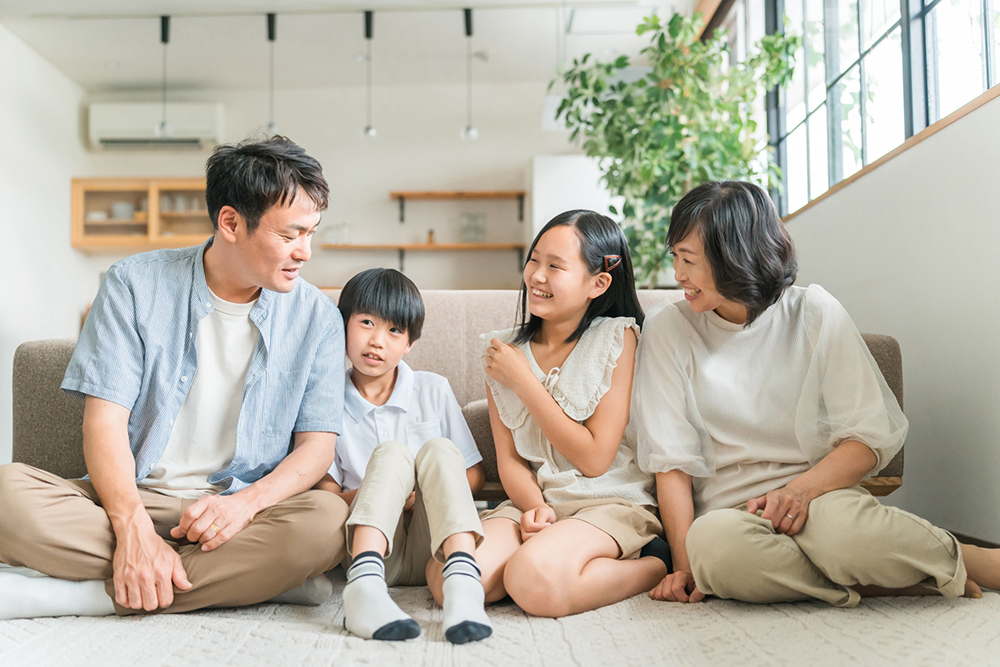
How Do Japanese People Address Their Parents?

If you’ve ever studied Japanese even a little, you’ve probably come across the words “お父さん otōsan” and “お母さん okāsan”, which are used to address parents.
However, you might have wondered: “I just learned ‘父 chichi’ and ‘母 haha’ in my class, but in the movie I watched last week, they said ‘親父 oyaji’ and ‘おふくろ ofukuro’. Which one is correct?”
Today, we’ll dive into the fascinating world of how people in Japan address their parents in various ways.
How Do You Address Your Father and Mother? Is There Only One Term per Language?
How do you address your parents in your native language? Is the way you use common to everyone in your country?
To the question, “Do Japanese people actually address their parents as ‘otōsan’ and ‘okāsan’?” the answer is both yes and no.
Personally, I call my father “otōsan” and my mother “okāsan,” but in reality, the way people address their parents varies depending on their age, where they live, and how they view their relationship with their parents.
However, this is not limited to Japanese. Surely, there are multiple ways to address parents in your native language as well. For instance, in English, one might use father, dad, or daddy when referring to a father, and mother, mom, or mommy for a mother. There is not just a single term in use. The same applies to Japanese.
With that said, what are the various ways to address parents in Japan? Let us take a closer look at the different terms and contexts involved.
In Fact, There Are Numerous Ways to Address Parents in Japanese
How you address your parents in Japanese depends on the individual and involves factors such as:
・The speaker’s age
・The region where they live
・Their way of thinking or perspective
The most basic way to address parents in Japanese is “otōsan” and “okāsan.”
However, it is common for small children to say “パパ papa” and “ママ mama” because these are easier to pronounce. That being said, if adults use these terms, they might sound immature. Therefore, many people switch to “otōsan” and “okāsan” as they grow older.
This can also vary depending on the region. For instance, in the Kansai area—such as Osaka and Kyoto—people often say “おとん oton” and “おかん okan.” These are part of the local dialect, so if you are in the Kanto area, like Tokyo, it is rare to hear them. Personally, even though I’m from Kyoto, I don’t use “oton” and “okan” because I feel they sound somewhat less polite. However, my brother does use them.
Individual perspectives can also affect how people address their parents. For example, some men refer to their father as “oyaji” and their mother as “ofukuro.” This style is a bit old-fashioned and you might encounter it in TV shows or movies. The terms sound quite masculine, so if that fits your style, you might choose to use them.
There is no strictly correct or incorrect way to address parents, as Japanese offers a variety of expressions. Therefore, whichever terms you use are entirely acceptable.
What Is Typically Presented in Beginner Japanese Textbooks?
How are these terms presented in the Japanese textbooks you use?
First, let’s clarify the difference between “chichi” and “otōsan,” as well as “haha” and “okāsan.”
・父 (chichi) / 母 (haha)
These terms are used when talking about your family to others.
For example:
私の父は、会社員です。(Watashi no chichi wa, kaishain desu.)
– “My father is a company employee.”
母の名前は、まゆみです。(Haha no namae wa, Mayumi desu.)
– “My mother’s name is Mayumi.”
・お父さん (otōsan) / お母さん (okāsan)
[1] Used when talking about someone else’s parents:
Example:
山田さん、お父さんのお仕事は 何ですか。(Yamada-san, otōsan no oshigoto wa nan desu ka?)
– “Yamada-san, what does your father do for work?”
木村さんのお母さんは、学校の先生です。(Kimura-san no okāsan wa, gakkō no sensei desu.)
– “Kimura-san’s mother is a school teacher.”
[2] Used when addressing your own parents:
Example:
お父さん、おかえり!(Otōsan, okaeri!)
– “Welcome home, Dad!”
お母さん、今日のごはんは何?(Okāsan, kyō no gohan wa nani?)
– “Mom, what’s for dinner today?”
These nuances are crucial. For example, if you accidentally say “watashi no okaasan wa…” instead of “watashi no haha wa…” when talking about your mother at work, it can come across as somewhat immature. It’s important to remember that when referring to your own parents in conversation, you should use “chichi” and “haha.” Make sure to keep this distinction clear.
How Familiar Are You with the Ways of Addressing Parents? Your Path to Mastering Japanese
Now, let’s take a look at the various ways to address parents beyond “otōsan” and “okāsan,” which commonly appear in daily life, movies, and anime but are rarely found in Japanese textbooks.
First, we have the expressions “tōsan” and “kāsan.” These carry a slightly more casual nuance compared to “お父ちゃん otōsan” and “お母ちゃん okāsan,” and tend to be used more frequently by men than women. They are also favored by older generations rather than younger speakers.
Following these, the terms “otōchan” and “okāchan” appear, along with the versions without the honorific prefix: “父ちゃん tōchan” and “母ちゃん kāchan.” These forms, when compared to the “-san” suffix, sound more rustic and down-to-earth. They also carry a somewhat nostalgic, old-fashioned tone and are often heard in older TV dramas, typically used by children.
In addition to these, the previously mentioned “papa” and “mama” are commonly used. Regional variations include the Kansai dialect terms “oton” and “okan.” Moreover, some older, masculine expressions such as “ofukuro” and “oyaji” are still recognized. Incidentally, the phrase “おふくろの味 ofukuro no aji” refers to “mother’s home-cooked flavor,” symbolizing the taste of traditional homemade meals.
Incidentally, I was once asked by one of my students, “When do you use ‘父上 chichiue’ and ‘母上 hahaue’?” Have you ever heard these terms?
They also refer to “father” and “mother,” but were commonly used in the distant past, during the era when samurai still existed. While they may occasionally appear in anime or historical dramas, they are no longer used in everyday conversation. Therefore, please be careful not to say something like, “Yesterday, my ‘hahaue’…” in a professional or workplace setting.
Additionally, it is worth noting that Japanese people rarely address their parents by name. Unless there are special personal reasons or circumstances, most people simply call them “otōsan” or “okāsan” and similar terms.
Video Guide: Different Ways to Say “Mother” in Japanese
https://youtube.com/shorts/0J3khcOT1zg?si=vCadpfvPLrQL3PgI
Enhance Your Japanese Proficiency at TCJ!
As explained today, there are various ways to address parents in Japanese. The choice of expression often depends on factors such as an individual’s age, relationship with their parents, and regional background. Therefore, I encourage you to listen carefully in various situations and pay attention to how people address their parents.
If you wish to find the style of address that best suits you, please do not hesitate to consult our teachers at TCJ. You may discover something entirely new.

SHARE ON



- Japanese tips
- Kanji
- Want to Learn Japanese
- Private Lesson
- Japanese for Expats
- International Student Visa Program
- Job Hunting in Japan
- Japanese Language School
- Email Phrases
- Business Japanese
- Keigo
- Japanese For Executives
- Japanese Manners
- Learn Japanese
- Japan Trivia
- Basic Japanese
- Japanese Culture
- Japanese Beginner
- Japanese Advanced
- Japanese Greetings
- Japanese Phrases
- Online Lesson
- JLPT
- Business & Daily Life Japanese Program
- ビジネス日本語
- Interview
- 日本語上級者
4 Must-Have Apps for Everyday Life in Japan
Japan’s Iconic 抹茶(Matcha): Uncovering Myths and Reality