

TCJ Blog
- Japanese tips
- Kanji
- Want to Learn Japanese
- Private Lesson
- Japanese for Expats
- International Student Visa Program
- Job Hunting in Japan
- Japanese Language School
- Email Phrases
- Business Japanese
- Keigo
- Japanese For Executives
- Japanese Manners
- Learn Japanese
- Japan Trivia
- Basic Japanese
- Japanese Culture
- Japanese Beginner
- Japanese Advanced
- Japanese Greetings
- Japanese Phrases
- Online Lesson
- JLPT
- Business & Daily Life Japanese Program
- ビジネス日本語
- Interview
- 日本語上級者
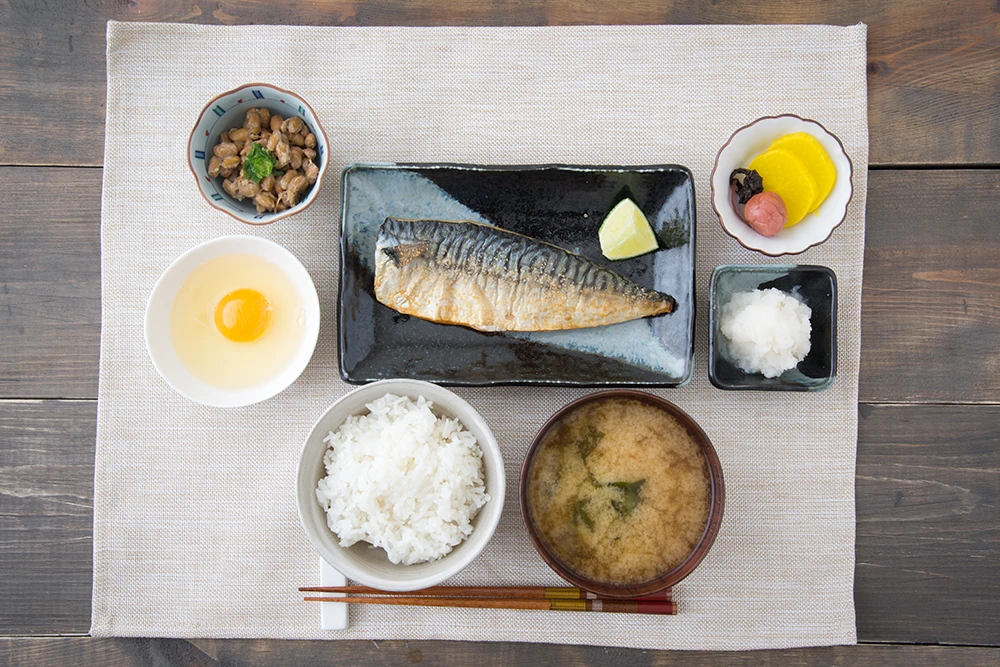
The Japanese Breakfast: History, Tradition, and Evolving Styles
“What do you usually eat for breakfast?” This seemingly simple question can reveal aspects of a country’s culture, history, and social structure. When asking a Japanese person about a typical Japanese breakfast, one might receive an answer such as white rice, miso soup, grilled fish, and pickled vegetables—a classic traditional Japanese-style breakfast. However, modern Japanese breakfasts offer more variety than one might expect. They range from simple dishes such as tamago kake gohan (rice topped with raw egg and soy sauce) to more elaborate, carefully prepared meals reminiscent of traditional ryokan breakfasts. Breakfast is often considered one of the most honest reflections of a society’s family structure and working styles in a given era. While traditional Japanese-style breakfasts continue to be passed down through generations, Japan’s morning food culture has gradually, yet steadily, changed alongside shifts in historical and social conditions. This article takes a closer look at contemporary breakfast practices in Japan, tracing the historical development of Japanese breakfast culture. A deeper understanding of food culture can lead to a more nuanced appreciation of a country as a whole.

The Culture of Number Pun Holidays in Japan: From Mt. Fuji Day to Meow-Meow Day
In Japan, it is common to see “what day it is today” featured in the news or on social media every day. Many of these days are unofficial holidays, such as Cat Day or Meat Day. These are not just random dates. They are based on a uniquely Japanese form of wordplay known as 語呂合わせ: goroawase, where numbers are read in ways that sound like words. Goroawase is a type of Japanese wordplay in which numbers are read in creative ways and turned into meaningful words. In Japanese, each number has multiple possible readings, such as on’yomi (Chinese-derived reading), kun’yomi (native Japanese reading), English pronunciation, or even onomatopoeic sounds. For example, the number “two” can be read as ni (on’yomi), futa (kun’yomi), two (English), or even nyan, the sound of a cat’s meow. By taking advantage of these flexible readings, people in Japan often assign meanings and word associations to numbers, turning them into playful expressions and even “holidays.”

Business Card Etiquette in Japan: How to Make a Strong First Impression
Exchanging 名刺: meishi, or business cards, is often the first step when meeting someone in a business setting. In some countries, it may simply be part of a self-introduction; however, in Japan, its meaning is slightly different. Business card exchange is not just a formal gesture, but an important first step in building a strong professional relationship. In this article, I draw on my experience teaching foreign employees working in Japan to provide a clear explanation of business card exchange—a practice that can often be confusing in professional settings. I will cover its cultural background, specific manners, and how it differs from practices in other countries.

Convenience Stores in Japan:Beyond Food and Everyday Items—Shipping, Printing, and More
One of the places that most fascinates foreign visitors in Japan is neither a famous tourist attraction nor a shrine, but the convenience store, commonly known as コンビニ: konbini. The convenience of Japanese convenience stores is widely recognized. In addition to offering ready-to-eat items such as onigiri (rice balls) and bento, they also provide a range of services, including parcel delivery, photocopying, and document printing. As a result, some visitors may even find themselves wondering whether these stores function as small supermarkets, post offices, or something else entirely. Most convenience stores in Japan are relatively small in size, yet they offer a wide range of functions. This multifunctionality is one of their defining characteristics. This article explores the various convenient services available at Japanese convenience stores.

Hay Fever in Japan: A Springtime Struggle
Spring is the season when temperatures rise and cherry blossoms bloom. However, for many people in Japan, it is also a time of seasonal struggle—花粉症: kafunsho(hay fever). With symptoms such as a runny nose, sneezing, and itchy eyes, some even find spring difficult to fully enjoy. I am one of them. In this article, we explore hay fever, a seasonal hallmark in Japan, along with its causes, symptoms, and ways to cope with it. We also touch on how it relates to the journey of learning Japanese.