

TCJ Blog
- Japanese for Expats
- International Student Visa Program
- Job Hunting in Japan
- Japanese Language School
- Email Phrases
- Business Japanese
- Keigo
- Japanese For Executives
- Japanese Manners
- Learn Japanese
- Japan Trivia
- Basic Japanese
- Japanese Culture
- Japanese Beginner
- Japanese Advanced
- Japanese Greetings
- Japanese Phrases
- Online Lesson
- JLPT
- Business & Daily Life Japanese Program
- ビジネス日本語
- Interview
- 日本語上級者
- Japanese tips
- Kanji
- Want to Learn Japanese
- Private Lesson

3 Benefits of Japanese Language School vs. Direct University Admission
Many students considering studying in Japan may wonder whether they should attend a Japanese language school before entering university or enroll in a university directly from the outset. While both language schools and universities are educational institutions where international students can study, the roles they play in the educational process are quite different. In this article, a teacher shares three key benefits of attending a Japanese language school, drawing on experiences and interactions with students in an actual educational setting.

Japanese-English False Friends: Words That Sound Familiar but Mean Something Different
For learners of Japanese whose first or second language is English, katakana words can sometimes be misleading. Because many of these words resemble familiar English words, it is easy to assume that they carry the same meaning, which can lead to misunderstandings in everyday conversation. This article explores four commonly misunderstood katakana words—mansion, tension, Viking, and front—and explains how their meanings differ between Japanese and English. Each word is introduced with dictionary definitions and practical examples to help clarify how it is used in everyday situations. By recognizing the assumptions that can arise from familiar English words, it becomes easier to understand and use katakana words naturally in conversations, as well as in settings such as hotels and restaurants.

“すみません: Sumimasen”: A Common Japanese Expression for Apologies, Thanks, and More
Isn’t “sumimasen” one of the words Japanese people use most often in everyday conversation? We say “sumimasen” when calling a store clerk, when someone gives us directions, and when we bump into someone. Even though it’s just one word, its meaning varies depending on the situation, so many Japanese language learners wonder, “Why do we say ‘sumimasen’ instead of ‘arigatō’?” In this article, we’ll explain in detail the three main uses of “sumimasen”—“apology,” “thanks,” and “calling out to someone”—using example sentences.
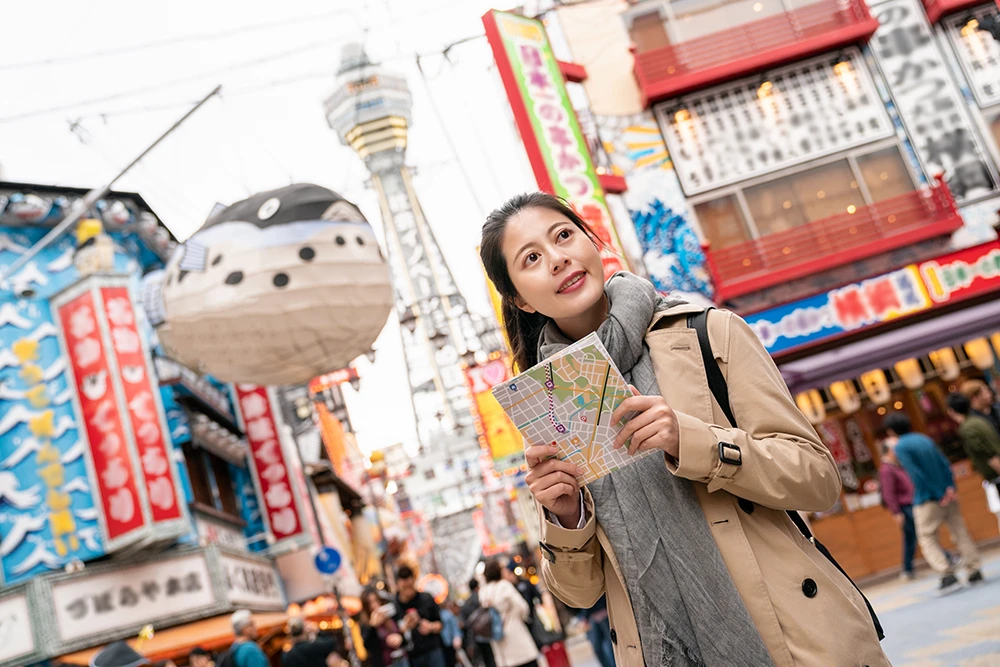
Kansai-ben and Standard Japanese: Differences to Know When Living in Osaka
Some Japanese learners may think that all Japanese people speak the same way. However, there are various dialects in Japan. Particularly in the Kansai region, including Osaka, Kyoto, and Kobe, 関西弁(Kansai-ben), the Kansai dialect, is commonly heard. For example, in standard Japanese, people often say “sō desu ne” when agreeing with someone, while in Kansai-ben, expressions such as “se yana” or “sō yana” are commonly used instead. Because of differences like these, some learners may wonder whether learning Kansai-ben is necessary when living in Osaka. This article introduces an overview of Kansai-ben, how it differs from standard Japanese, and whether learning the Kansai dialect is necessary.

The Culture of Number Pun Holidays in Japan: From Mt. Fuji Day to Meow-Meow Day
In Japan, it is common to see “what day it is today” featured in the news or on social media every day. Many of these days are unofficial holidays, such as Cat Day or Meat Day. These are not just random dates. They are based on a uniquely Japanese form of wordplay known as 語呂合わせ: goroawase, where numbers are read in ways that sound like words. Goroawase is a type of Japanese wordplay in which numbers are read in creative ways and turned into meaningful words. In Japanese, each number has multiple possible readings, such as on’yomi (Chinese-derived reading), kun’yomi (native Japanese reading), English pronunciation, or even onomatopoeic sounds. For example, the number “two” can be read as ni (on’yomi), futa (kun’yomi), two (English), or even nyan, the sound of a cat’s meow. By taking advantage of these flexible readings, people in Japan often assign meanings and word associations to numbers, turning them into playful expressions and even “holidays.”