

TCJ Blog
- Japanese tips
- Kanji
- Want to Learn Japanese
- Private Lesson
- Japanese for Expats
- International Student Visa Program
- Job Hunting in Japan
- Japanese Language School
- Email Phrases
- Business Japanese
- Keigo
- Japanese For Executives
- Japanese Manners
- Learn Japanese
- Japan Trivia
- Basic Japanese
- Japanese Culture
- Japanese Beginner
- Japanese Advanced
- Japanese Greetings
- Japanese Phrases
- Online Lesson
- JLPT
- Business & Daily Life Japanese Program
- ビジネス日本語
- Interview
- 日本語上級者

A Japanese language teacher teaches! Summary of Japanese expressions that are easy to make mistakes
"たばこ:Tobacco(tabako)” and "たまご:egg(tamago)", "にく:meat(niku)" and "くに:country(kuni)" are Japanese words with similar readings but different meanings. There are also many things that have different meanings when said in different ways. In this article, I would like to introduce some expressions that Japanese language learners find easy to make mistakes in, from the point of view of a Japanese language teacher.

Be Prepared: Essential Phrases for Medical Emergencies
During your travels, you might get injured, or if you’ve just started living in Japan, you may feel unwell while adjusting to your new environment… Can you explain your condition smoothly at a Japanese hospital? While some hospitals in Japan are starting to offer support in English, Chinese, and other languages, there’s still room for improvement. In this article, we introduce useful Japanese phrases you can use when visiting a hospital.

How to use first-person pronouns in Japanese
“I like you” or “我喜欢你” (Chinese). This is the phrase used in English or Chinese when saying “I like you.” However, when translating them into Japanese, there are many ways to say “I,” such as “Watashi wa anata ga suki desu,” “Ore wa kimi ga suki desu,” or “Uchi wa anata ga suki desu.” These “I” or “我” (which means “I” in Chinese) are called first-person pronouns. First-person pronouns are used to describe the speaker or writer. Japanese first-person pronouns have a variety of options besides “watashi.”

Beautiful Japanese Words to Express Weathers and Time
Japanese has various words expressing weather, not only “sunny,” “cloudy,” “rainy” and “snowy.” Also, it has lots of words to express the movement of the sun and time. Let’s check Japanese words related to “weather” that we often use in conversation.
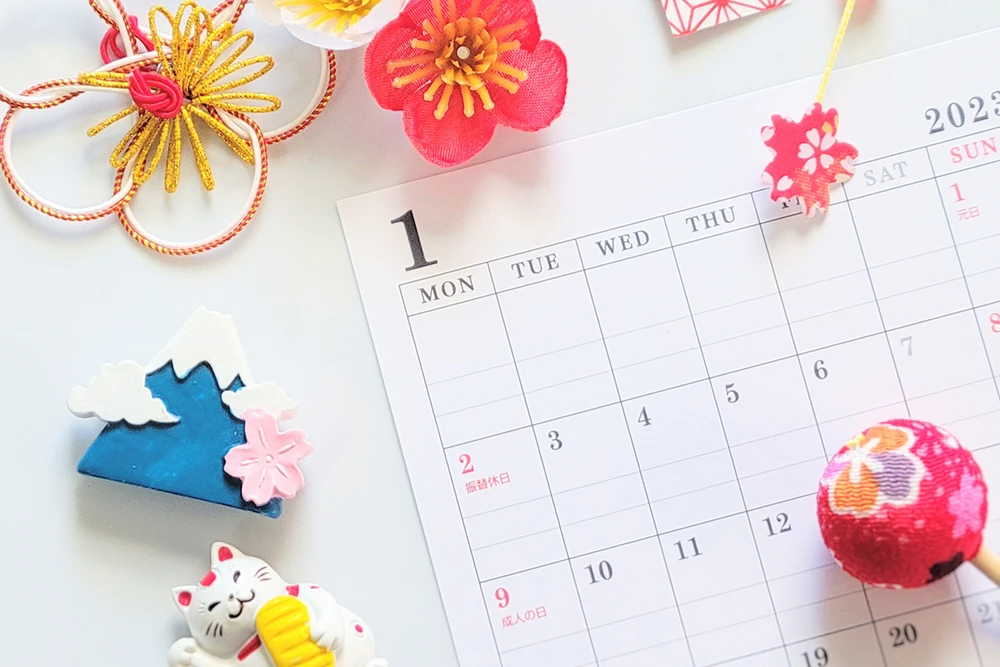
Japan’s Holidays: Discover the Culture Behind Each One
This article is intended for those residing in Japan, planning to visit, or interested in the Japanese language and culture. Japan’s national holidays are deeply rooted in its history and traditions. We will examine the holidays observed in Japan in 2026, exploring the significance of each occasion, the cultural aspects associated with them, and ways to appreciate these special days. Familiarity with Japan’s holidays will not only enrich your experience during your stay but may also serve as a meaningful starting point for your journey into understanding Japanese culture and language.